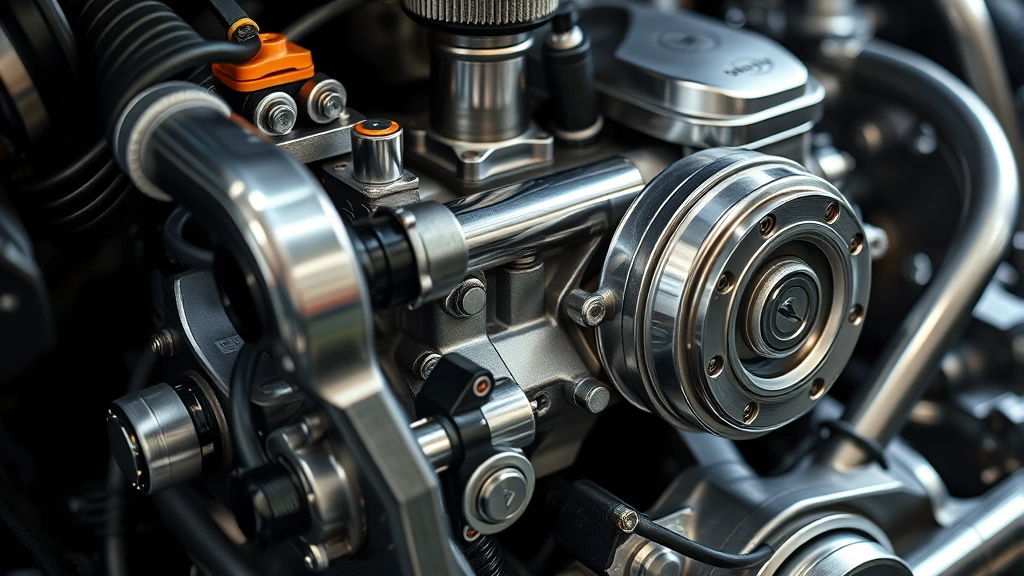
Audi Performance Parts: Enhance Your Ride with Precision Engineering
Your Audi isn’t just a car—it’s a statement of engineering excellence. But what if you could push that excellence even further? Whether you’re piloting an A4, an RS model, or anything in between, the world of Audi performance parts offers genuine opportunities to transform your driving experience. We’re not talking about slapping on random upgrades and hoping for the best. We’re talking about strategic, thoughtful enhancements that actually work with your vehicle’s DNA rather than against it.
The beauty of upgrading an Audi is that the foundation is already solid. You’re starting with a platform designed by engineers who understood performance from day one. What performance modifications do is unlock potential that’s already baked into the design. It’s like discovering your car has been operating at 70% capacity all along, and you finally have the keys to access the remaining 30%.
In this guide, we’ll explore the practical world of Audi performance parts—what actually delivers results, what’s worth your investment, and how to approach modifications with intelligence rather than impulse.
Engine Upgrades and Tuning
Let’s start where it matters most: under the hood. Engine modifications represent the most impactful category of Audi performance parts, and they’re also where you need to be most thoughtful about your choices.
ECU (Engine Control Unit) tuning has become the gateway drug for Audi enthusiasts, and for good reason. Your Audi’s factory ECU is programmed conservatively—partly for emissions compliance, partly for warranty protection, and partly because Audi needs to account for varying fuel quality across different regions. A quality tune can unlock 20-50 additional horsepower depending on your model year and engine type. The best part? It’s completely reversible, making it the perfect entry point into the performance world.
Stage 1 tunes represent the sweet spot for most drivers. You get meaningful power gains without stressing the factory components. Stage 2 and beyond start requiring supporting modifications—upgraded fuel systems, reinforced internals, that sort of thing. Think of it like building a pyramid: you need a solid foundation before you stack anything higher.
If you’re considering more aggressive modifications, look at companies specializing in Audi performance engineering. The quality difference between a generic tune and one specifically calibrated for your model is substantial. This is where your investment actually pays dividends in reliability and longevity.
For those interested in comparing different performance philosophies, the 2024 Lexus IS 500 F Sport Performance approach offers interesting contrasts in how different manufacturers approach performance from the factory. Similarly, the 2022 Tesla Model Y Performance represents an entirely different paradigm in electric performance tuning.
Suspension and Handling Enhancements
Here’s where your Audi transforms from a fast car into a precise instrument. Factory suspension is engineered for comfort-to-performance balance, which means it’s compromised on both ends. Upgraded suspension components give you the ability to dial in exactly what you want.
Coilover systems represent the most comprehensive suspension upgrade available. Unlike lowering springs that simply compress your existing setup, coilovers give you independent control over ride height, spring rate, and damping. You can adjust your car for a weekend track day, then dial it back for your commute. The engineering precision involved in quality coilovers is genuinely impressive—we’re talking about systems that account for load transfer, anti-squat geometry, and brake dive characteristics.
Sway bars (anti-roll bars) are the underrated hero of handling upgrades. They cost a fraction of coilovers but deliver noticeable improvements in corner response and body roll control. A front sway bar reduces understeer, while a rear sway bar can be tuned to adjust oversteer characteristics. Many enthusiasts start here before committing to full suspension overhauls.
Bushings might sound boring, but they’re genuinely important. Factory rubber bushings allow microscopic amounts of movement that add up to vague steering feel and imprecise handling. Polyurethane or spherical bearing replacements tighten everything up considerably. Your steering feedback improves, your car responds more directly to inputs, and the whole driving experience feels more connected.

For perspective on how different manufacturers approach suspension tuning, the AMG GT63S E Performance demonstrates Mercedes’ engineering philosophy. It’s worth studying how different brands prioritize different aspects of chassis dynamics.
Advanced Braking Systems
Performance is meaningless without the ability to stop. Yet many enthusiasts obsess over horsepower while ignoring braking upgrades—a backwards approach if we’re being honest.
Factory Audi brakes are competent, but they’re engineered around moderate use. When you’re pushing your car harder—whether on track or on spirited road drives—you need braking components that can handle repeated high-temperature stops without fade.
Upgraded brake pads are the logical starting point. High-performance compounds offer better friction coefficients at higher temperatures compared to factory pads. The tradeoff is slightly more dust and a bit of noise, but the stopping power improvement is tangible and immediate. You’ll notice the difference on your first spirited drive.
Brake rotors come next. Slotted or drilled rotors improve heat dissipation and provide better bite, especially in wet conditions. The slots or holes help evacuate brake dust and moisture away from the rotor surface. Cross-drilled rotors look aggressive (which matters if you care about aesthetics), while slotted rotors offer slightly better performance characteristics.
For serious performance applications, consider a complete brake system upgrade with larger diameter rotors and multi-piston calipers. This is where you’re moving into genuine track-day territory, but the modulation and confidence improvements are substantial.
Exhaust Performance Solutions
Exhaust modifications sit at the intersection of performance and personality. Yes, they deliver real power gains and weight reduction. But they also change how your Audi sounds and feels—and that matters to the overall ownership experience.
The factory exhaust system on your Audi is engineered for emissions compliance and sound dampening. It’s restrictive by necessity. An aftermarket performance exhaust reduces backpressure, allowing your engine to breathe more freely. Depending on the system, you’re looking at 5-15 horsepower gains, plus improved throttle response.
Cat-back systems (everything after the catalytic converter) are the most common upgrade path. They’re relatively affordable, don’t require complex installation, and they’re legal in most jurisdictions. They also deliver that signature performance exhaust note that makes your car sound as good as it performs.
Headers represent a more aggressive upgrade. By replacing the factory manifolds, you’re optimizing exhaust scavenging and flow from cylinder to cylinder. Headers typically require more involved installation and can generate heat in the engine bay, but the performance gains are more substantial than cat-back systems alone.
Full exhaust systems that include headers, downpipes, and cat-back components represent the complete solution. You’re optimizing exhaust flow from the moment combustion occurs. These are investments—both financially and in terms of installation complexity—but they deliver the most comprehensive exhaust performance gains available.
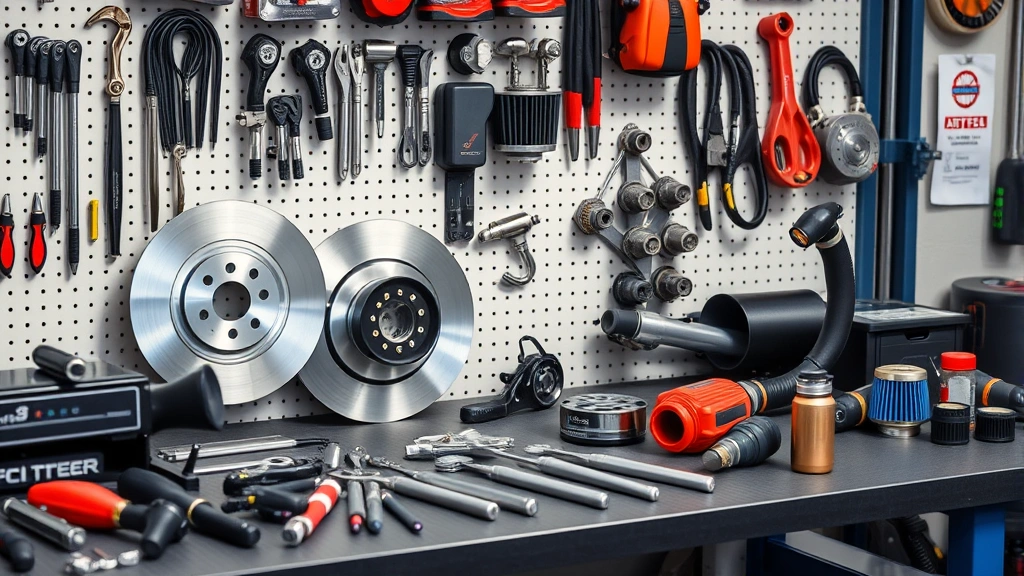
Aerodynamic Improvements
Aerodynamics might sound like something only race teams care about, but the principles apply to any Audi you drive regularly. Improved aerodynamics means better stability at speed, reduced drag (which helps fuel economy and top speed), and enhanced cooling efficiency.
Front splitters and lip spoilers reduce lift at the front axle. At highway speeds, aerodynamic lift can reduce front tire grip and make your car feel less planted. A well-designed splitter creates downforce that improves stability and cornering confidence. The aerodynamic improvement is invisible to you until you need it, but it’s constantly working.
Rear wings and diffusers serve similar purposes at the rear. They generate downforce that improves rear-end stability, particularly at speed. For Audi models that already have aero performance built into their design, aftermarket components can complement and enhance that engineering.
Side skirts and rocker panels reduce turbulent airflow along the car’s sides. This might seem cosmetic, but the aerodynamic effect is real. Smoother airflow means better handling consistency and slightly improved fuel economy.
The key to aerodynamic upgrades is ensuring they’re designed for your specific model. Generic wings and splitters often look good but provide minimal actual benefit. Purpose-built aerodynamic components engineered specifically for Audi platforms deliver real improvements in both performance and appearance.
Cold Air Intake Systems
Your engine’s performance is fundamentally limited by how much air it can draw in. Factory intake systems balance air intake with noise and emission considerations. Performance intake systems optimize for air quantity and quality.
Cold air intakes relocate the air intake point to draw cooler, denser air from outside the engine bay rather than hot air from around the radiator. Cooler air contains more oxygen molecules, which means more fuel can be burned and more power generated. The improvement is modest—typically 5-10 horsepower—but it’s a cost-effective upgrade that also improves throttle response.
Intake systems with reusable, high-flow filters reduce restriction compared to factory paper filters. These can be cleaned and reused indefinitely, which actually makes them more economical long-term despite the higher upfront cost.
The sound is a bonus. Performance intake systems let your engine’s natural induction noise through to the cabin, creating a more engaging driving experience. Some people love this; others find it excessive. That’s where personal preference comes in.
Transmission Optimization
Your transmission is your engine’s partner in delivering power to the wheels. Optimizing transmission performance ensures that power delivery is efficient, responsive, and reliable.
For manual transmission Audis, a short-throw shifter reduces shift gate distances without compromising reliability. The improvement in shift speed and engagement is noticeable, particularly during spirited driving. It’s a relatively affordable upgrade that transforms the driving experience.
For dual-clutch transmission (DSG) models, transmission tuning can improve shift speed and responsiveness. Some tuning packages optimize launch control for better acceleration off the line. Others focus on reducing shift lag during normal driving.
Transmission fluid upgrades are often overlooked but genuinely important. Factory fluid is engineered for moderate use and broad temperature ranges. Performance transmission fluids are specifically formulated for higher-stress applications, offering better heat dissipation and more consistent performance across temperature extremes.
Differential upgrades deserve mention here too. Limited-slip differentials improve traction by distributing power more intelligently between wheels. Helical or Torsen differentials offer advantages over factory open differentials, particularly in performance driving situations where you want predictable power delivery and minimal tire slip.
Installation and Maintenance Considerations
Here’s where the rubber meets the road: actually getting these upgrades installed and keeping your modified Audi running reliably.
Professional installation matters more than you might think. While some upgrades (air filters, pads) are genuinely DIY-friendly, others require specialized knowledge. Suspension work, engine tuning, and exhaust installation are best left to specialists who understand Audi-specific engineering and have the proper diagnostic equipment.
Find a shop with genuine Audi expertise. Generic performance shops might sell you parts, but Audi specialists understand the nuances of your specific model. They know which modifications work well together, which combinations to avoid, and how to tune everything for optimal results.
Warranty considerations matter too. Major modifications—particularly engine tuning—will void your factory warranty. That’s not necessarily a dealbreaker, but it’s worth understanding the implications before committing. Some shops offer their own warranties on modified components, which provides some peace of mind.
Maintenance becomes more critical with a modified Audi. Upgraded components often require more frequent servicing, premium fluids, and more careful driving habits. A tuned engine needs quality fuel and regular oil changes. Performance brakes need periodic inspection. It’s not dramatically more demanding, but it requires more attention than stock maintenance.
Documentation is your friend. Keep records of every modification, every service, every fluid change. This documentation protects your investment and helps any future technician understand what’s been done to your car.
If you’re interested in how other manufacturers approach performance parts, ace performance components and ams performance systems offer interesting case studies in performance engineering across different brands.
For research on the science behind performance modifications, peer-reviewed automotive engineering research provides technical depth on suspension dynamics, aerodynamics, and engine optimization. Harvard Business Review occasionally covers the business of automotive performance, while Psychology Today has interesting articles on the psychology of car enthusiasts and performance motivation. For practical technical guidance, AudiWorld forums offer community expertise from experienced Audi modifiers.
Frequently Asked Questions
Will Audi performance parts void my warranty?
Most major modifications will void your factory warranty, particularly engine tuning and suspension work. Some dealers are more flexible than others, so check with your specific dealership. Consider that warranty costs are often lower than the cost of major repairs, so the math might still favor modification. Many aftermarket shops offer their own warranties on modified components.
What’s the best first modification for an Audi?
Start with an ECU tune if you want performance gains, or upgraded brake pads if you want to improve safety and handling. Both are relatively affordable, reversible, and deliver immediate, noticeable improvements. From there, your next steps depend on whether you’re prioritizing performance, handling, or appearance.
How much horsepower can I realistically add?
This depends entirely on your model year and engine type. A modest ECU tune on a 2.0T engine might add 30-50 horsepower. A complete modification package on an RS model could add 100+ horsepower. The law of diminishing returns applies—each successive modification delivers smaller gains and requires more investment.
Are performance parts reliable long-term?
Quality performance parts from reputable manufacturers are absolutely reliable. The key word is “quality.” Cheap parts from unknown brands are where reliability issues arise. Stick with established performance brands, have professional installation, and maintain your modified Audi properly. Most performance Audis run reliably for hundreds of thousands of miles.
Can I install performance parts myself?
Some upgrades (air filters, pads, basic exhaust work) are genuinely DIY-friendly if you have mechanical aptitude and proper tools. Others (suspension, engine tuning, complex exhaust) really benefit from professional installation. Consider your skill level honestly and don’t hesitate to pay for professional work when complexity warrants it.
What’s the difference between quality performance parts and cheap alternatives?
Quality performance parts are engineered specifically for your model, manufactured to precise tolerances, and tested extensively. Cheap alternatives are often generic parts that happen to fit, manufactured to looser tolerances, and rarely tested in real-world conditions. The price difference is usually worth the investment in reliability and actual performance gains.
Should I modify my Audi all at once or gradually?
Gradual modification is usually smarter. It lets you understand how each change affects your car’s behavior, identify any compatibility issues, and spread costs over time. Start with foundational upgrades, then build from there. This approach also helps you avoid expensive mistakes.


