
Can Music Enhance Focus? Expert Insights on Sound and Concentration
Music has long captivated human attention, but can it actually sharpen your focus? The relationship between sound and concentration is more nuanced than a simple yes or no. Recent neuroscience research reveals that certain types of music can dramatically enhance cognitive performance, while others create significant distractions. Understanding how different musical elements affect your brain’s ability to concentrate is essential for anyone seeking to optimize their productivity.
Whether you’re studying for an exam, working on a creative project, or managing work-related stress that impacts your ability to focus, the right soundtrack could be your secret weapon. However, not all music serves this purpose equally. This comprehensive guide explores the science behind music and focus, helping you make informed decisions about what to play during your most demanding mental tasks.
How Music Affects Your Brain During Focused Work
When you listen to music, multiple regions of your brain activate simultaneously. The auditory cortex processes sound waves, while the prefrontal cortex—responsible for executive function and decision-making—engages with the music’s emotional and structural elements. This activation pattern can either enhance or impair your ability to concentrate, depending on the music’s characteristics.
Research from the National Center for Biotechnology Information demonstrates that music triggers the release of dopamine, a neurotransmitter crucial for motivation and focus. When dopamine levels increase, your brain becomes more alert and better equipped to maintain attention on complex tasks. However, this benefit only occurs when the music doesn’t demand excessive cognitive resources to process.
The Mozart Effect, a phenomenon suggesting that listening to classical music temporarily enhances spatial-temporal reasoning, gained significant attention in the 1990s. While subsequent research has nuanced these initial claims, studies confirm that certain musical characteristics can measurably improve concentration. The key lies in matching your music selection to your specific task demands.
If you’re struggling with focus due to underlying mental health conditions, exploring can I get disability for mental health resources might provide additional support. Many individuals find that combining proper mental health management with focus-enhancing strategies yields the best results.
Best Types of Music for Enhancing Concentration
Classical and Baroque Music remain the gold standard for focus work. Composers like Bach, Vivaldi, and Beethoven created intricate structures that engage the brain without overwhelming it. The mathematical precision of classical compositions aligns with how our brains process information, creating an optimal cognitive state. Studies show that Baroque music, in particular, features consistent rhythmic patterns that synchronize with brainwave activity associated with deep concentration.
Ambient and Electronic Music has emerged as a modern alternative for focus work. Artists like Brian Eno, who explicitly designed ambient music for concentration, create soundscapes that provide consistent auditory input without demanding active listening. The lack of lyrics and predictable structure allows your cognitive resources to remain dedicated to your primary task.
Lo-Fi Hip-Hop and Chillhop have gained popularity among students and professionals seeking contemporary focus music. These genres combine gentle beats with minimal melodic variation, creating an unobtrusive backdrop that maintains alertness without distraction. The nostalgic, warm quality of lo-fi production seems to trigger a relaxed-focus state optimal for sustained concentration.
Nature Sounds and Binaural Beats offer another approach. Rainfall, ocean waves, and forest ambience provide familiar auditory environments that your brain processes effortlessly. Binaural beats—slightly different frequencies played in each ear—may encourage brainwave entrainment toward alpha or theta states associated with focused attention, though research on their efficacy remains ongoing.
For those interested in building sustainable focus habits, our guide on atomic habits review explores how small, consistent changes compound into remarkable productivity improvements.

Tempo, Volume, and Other Critical Factors
Tempo Considerations significantly impact your ability to concentrate. Research suggests that music between 50-80 beats per minute (BPM) optimizes focus for analytical and detail-oriented work. This tempo range aligns with a relaxed but alert mental state. Faster music (120+ BPM) can enhance focus during physical tasks but often distracts during cognitive work requiring deep concentration. Slower music below 50 BPM may induce drowsiness during extended sessions.
Volume Levels matter more than many realize. Moderate volume—around 60-70 decibels—provides enough auditory stimulation to mask distracting environmental noise without demanding conscious attention. Too quiet, and ambient sounds penetrate your focus; too loud, and the music itself becomes the distraction. Individual sensitivity varies, so experimentation proves essential.
Lyrical Content presents a crucial consideration. Music with lyrics requires language processing, which competes with language-based tasks like writing or reading. If you’re working on linguistic tasks, instrumental music dramatically outperforms vocal-based genres. However, for non-linguistic work like coding, design, or mathematical problem-solving, some individuals find that familiar lyrics—even in a non-native language—pose minimal interference.
Novelty and Familiarity Balance influences sustained focus. Completely new music captures attention as your brain processes unfamiliar patterns, potentially reducing focus on your primary task. Conversely, overly familiar music may become background noise that no longer engages your dopamine system. The sweet spot exists in music you know well enough not to analyze but recent enough to maintain mild novelty.
Understanding how your mental health impacts focus capacity represents another crucial dimension. Our comprehensive resource on best mental health books offers evidence-based approaches to strengthening your cognitive foundation.
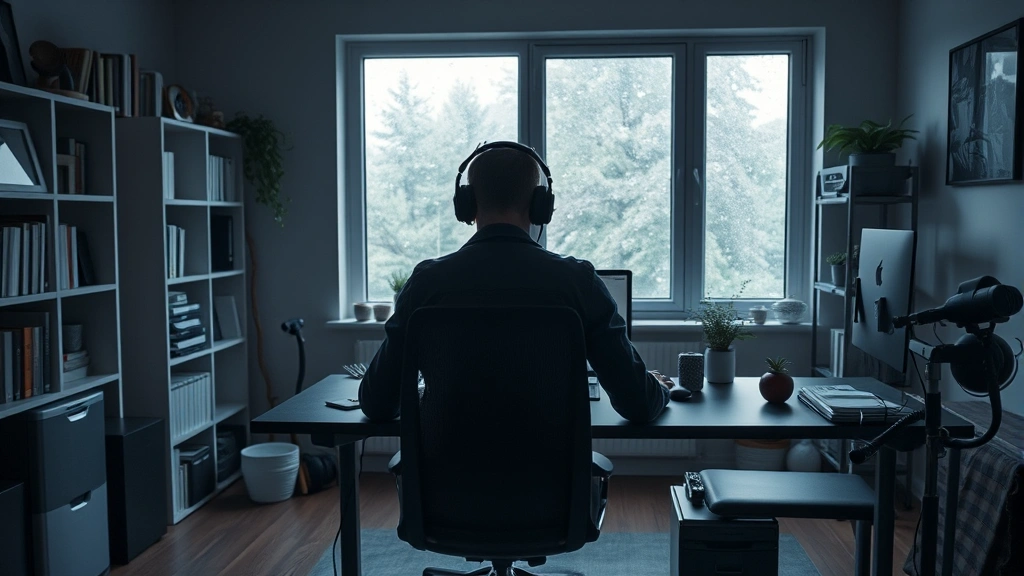
Music Versus Silence: What Research Actually Shows
The question of whether music or silence better supports focus depends entirely on context and individual differences. Silence provides maximum cognitive resources for your primary task, making it ideal for exceptionally complex or novel work requiring your full mental capacity. However, silence often feels uncomfortable in modern environments filled with background noise.
Research from PLOS ONE indicates that moderate background music actually improves focus for many people by masking unpredictable environmental sounds. Unpredictable noise—like conversations, traffic, or office chatter—severely disrupts concentration because your brain involuntarily allocates attention to potentially important sounds. Consistent, predictable music acts as auditory camouflage, protecting your focus from these involuntary attention shifts.
Individual differences substantially influence these outcomes. Extroverts often benefit more from music’s dopamine-boosting effects than introverts. People with ADHD frequently find that music helps regulate attention, while others with sensory sensitivities may experience music as overwhelming. Your personality, neurotype, and current mental state all modulate how music affects your concentration.
Task Complexity Matters Enormously. For routine, well-practiced tasks, music consistently enhances both performance and enjoyment. For novel, highly complex tasks requiring sustained focus and creative problem-solving, silence or minimal music often produces superior results. Most people benefit from silence during the initial learning phase of complex material, then transition to music once foundational understanding solidifies.
Managing Focus Challenges Beyond Music Alone
While music can enhance concentration, it’s not a complete solution for focus challenges. Multiple factors influence your ability to concentrate, and addressing them comprehensively yields far better results than relying on music alone.
Sleep Quality and Duration form the foundation of cognitive function. Research consistently shows that sleep deprivation impairs focus more severely than almost any other factor. Before optimizing music choices, ensure you’re sleeping 7-9 hours nightly. Poor sleep undermines dopamine regulation, making even ideal focus music ineffective.
Physical Movement and Exercise dramatically enhance concentration capacity. Exercise increases blood flow to the brain, promotes neuroplasticity, and improves dopamine function—the same mechanisms music activates. A 20-minute walk before focused work often produces more dramatic focus improvements than any musical selection.
Nutrition and Hydration directly impact cognitive performance. Blood sugar fluctuations impair focus more than many realize. Stable nutrition with adequate protein, healthy fats, and complex carbohydrates supports sustained attention far better than sugary snacks. Dehydration reduces cognitive function by 10-15%, so maintaining hydration represents a simple yet powerful focus enhancement.
Environmental Design shapes your ability to concentrate. Temperature, lighting, and physical workspace organization all influence focus capacity. A cool room (around 68-70°F) promotes better concentration than a warm environment. Natural light or bright, cool-toned artificial lighting enhances alertness more effectively than warm lighting.
For those experiencing significant focus difficulties related to mental health conditions, resources addressing best mental health quotes and professional guidance become increasingly valuable. Mental health challenges directly impact concentration, and addressing them deserves equal priority to environmental optimizations.
Many individuals find that combining bible verses on mental health for spiritual grounding, professional support, and practical focus strategies creates a comprehensive approach to sustained concentration.
Frequently Asked Questions
What’s the best music for studying?
Classical music, particularly Baroque compositions, consistently ranks as optimal for studying. Aim for 50-80 BPM instrumental pieces without lyrics. Composers like Bach, Vivaldi, and Debussy work exceptionally well. Alternatively, lo-fi hip-hop or ambient music by artists like Brian Eno provide excellent modern alternatives. Experiment to discover your personal preference, as individual responses vary significantly.
Can music help with ADHD-related focus issues?
Yes, many individuals with ADHD report significant focus improvements with appropriate music. The consistent auditory input helps regulate attention and provides dopamine stimulation. However, music alone rarely addresses ADHD comprehensively. Combining music with other evidence-based approaches—including exercise, structured routines, and professional support—produces the most effective results.
Is silence actually better for concentration?
Silence works better than music only for exceptionally complex, novel tasks requiring maximum cognitive resources. For most work, moderate background music outperforms silence by masking disruptive environmental noise. The key distinction: silence versus predictable music beats unpredictable noise almost universally.
How loud should focus music play?
Aim for 60-70 decibels—roughly conversation level. This volume provides sufficient auditory stimulation to mask distracting sounds without demanding conscious attention. Individual preferences vary, so adjust based on your environment and task demands. If you find yourself listening to the music rather than your work, it’s too loud or too engaging.
Can music with lyrics help focus?
Music with lyrics generally impairs focus during language-based tasks like writing or reading, as language processing competes for cognitive resources. However, for non-linguistic work like coding, design, or mathematical problems, familiar lyrics in non-native languages pose minimal interference. Test your own response, as individual differences are substantial.
What if music distracts me rather than helps?
Some individuals genuinely focus better in silence, particularly those with sensory sensitivities or certain neurodivergent traits. Forcing music into your focus routine contradicts your brain’s natural preferences. Experiment with different genres, tempos, and volumes, but don’t persist with music if your performance consistently declines. Your ideal focus environment is highly individual.
Should I use the same music every day?
Consistency helps your brain associate specific music with focus mode, creating a mental anchor for concentration. However, complete novelty captures attention counterproductively. The optimal approach: maintain a core rotation of 3-5 playlists that you know well, occasionally introducing new selections to maintain mild novelty without excessive distraction.


