
What’s COP in Carnot Heat Pumps? Engineering Insight
The Coefficient of Performance (COP) stands as one of the most critical metrics in thermodynamic engineering, particularly when evaluating carnot heat pump efficiency. Understanding this fundamental principle separates efficient heating and cooling systems from wasteful ones, directly impacting energy consumption, operational costs, and environmental sustainability. For engineers, facility managers, and anyone invested in optimizing thermal systems, grasping COP fundamentals becomes essential knowledge.
Heat pumps represent a remarkable achievement in applied thermodynamics, allowing us to move thermal energy from cooler spaces to warmer ones—seemingly defying intuition but fully compliant with the laws of thermodynamics. The Carnot cycle provides the theoretical maximum efficiency ceiling for all heat pump operations, making it the gold standard against which real-world systems are measured. This engineering insight explores how COP functions within Carnot heat pump systems, why it matters, and how it influences practical applications across residential, commercial, and industrial sectors.
Understanding Coefficient of Performance
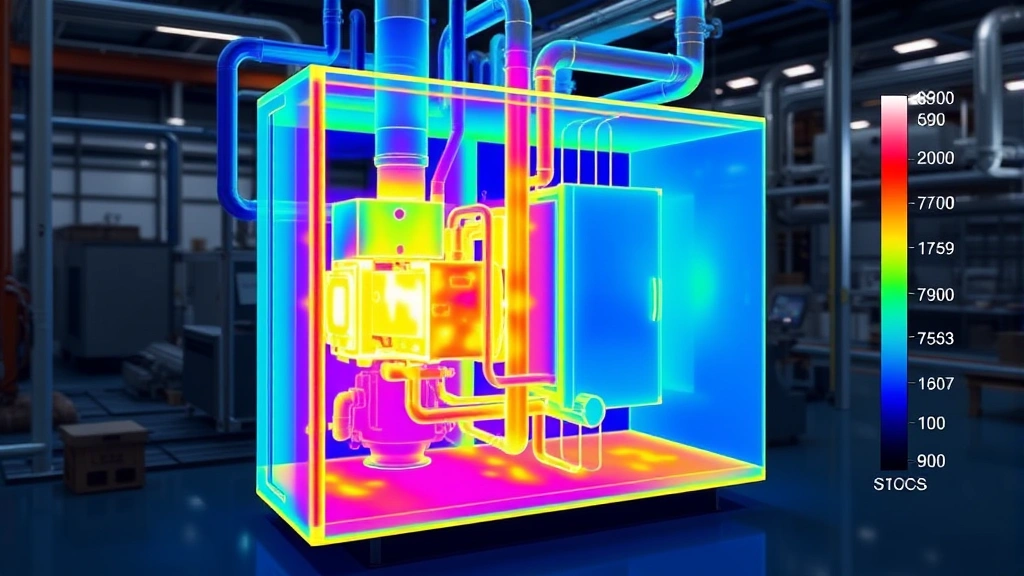
The Coefficient of Performance, abbreviated as COP, quantifies how efficiently a heat pump converts electrical input energy into thermal output. Unlike traditional efficiency ratings that measure output divided by input, COP specifically reflects the ratio of useful heat transferred to the work input required to accomplish that transfer. This distinction proves crucial because heat pumps don’t generate heat—they move heat from one location to another using mechanical work.
A COP of 3.0 means that for every unit of electrical energy consumed, the heat pump delivers three units of thermal energy to the desired location. This apparent violation of conservation principles resolves when recognizing that the third unit originates from the heat source (ambient air, ground, or water), not from electricity alone. This efficiency multiplier makes heat pumps dramatically more efficient than resistance heating, which offers a COP of approximately 1.0.
COP values vary depending on operating conditions, with heating and cooling modes producing different results. Heating COP (sometimes denoted as COPheating) typically exceeds cooling COP (COPcooling) because ambient air temperatures usually sit closer to desired heating temperatures than cooling temperatures. Understanding this distinction helps stakeholders select appropriate systems for their climate zones and seasonal requirements.
The practical significance of COP extends beyond energy bills. Higher COP systems reduce peak electrical demand, decrease strain on power grids during extreme weather, lower carbon footprints, and improve overall system reliability. For commercial applications managing large facilities, even marginal COP improvements translate to substantial annual savings and environmental benefits. Learn more about optimizing fuel-efficient systems that apply similar efficiency principles.
The Carnot Cycle Foundation
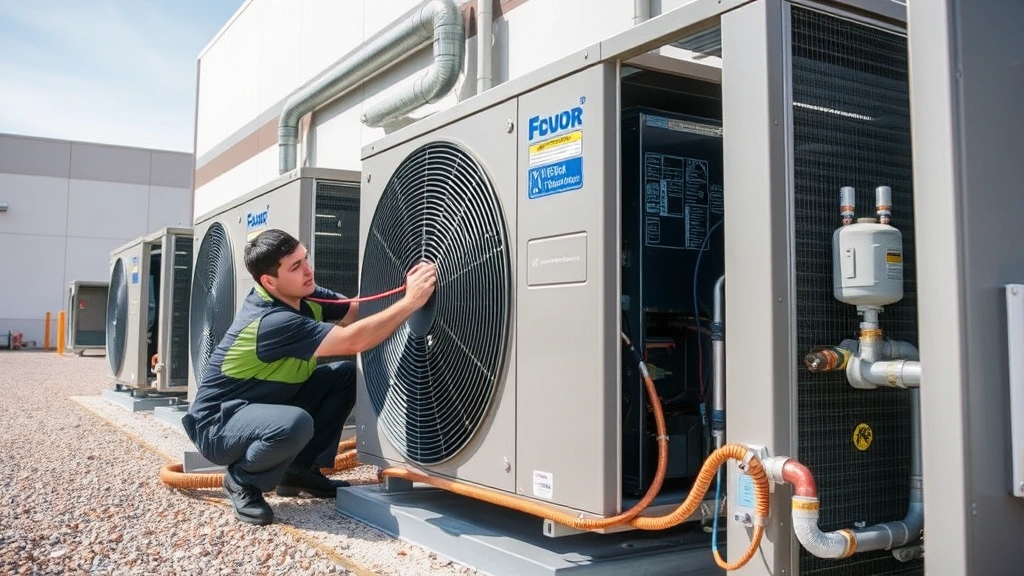
The Carnot cycle, conceived by French physicist Sadi Carnot in 1824, describes a theoretical thermodynamic cycle operating between two temperature reservoirs. This idealized process defines the maximum possible efficiency any heat engine or heat pump can achieve when operating between specified temperature conditions. No real-world system can match Carnot efficiency, but understanding this theoretical maximum provides crucial context for evaluating actual performance.
The Carnot heat pump operates through four reversible processes: isothermal expansion, adiabatic expansion, isothermal compression, and adiabatic compression. During isothermal expansion, the refrigerant absorbs heat from the cold reservoir at constant temperature. Adiabatic expansion follows, where the refrigerant cools without exchanging heat. Isothermal compression then transfers heat to the hot reservoir at constant temperature, and adiabatic compression completes the cycle, restoring the refrigerant to its initial state.
This theoretical framework establishes the Carnot COP formula: COP(Carnot) = T(hot) / (T(hot) – T(cold)), where temperatures are expressed in Kelvin. This elegant equation reveals several important truths. First, COP increases as the temperature difference between hot and cold reservoirs decreases. Second, COP depends entirely on absolute temperatures, not relative conditions. Third, achieving Carnot efficiency requires perfectly reversible processes—an impossibility in practice due to friction, heat losses, and irreversibilities inherent in real systems.
Understanding the Carnot limit helps engineers identify performance gaps and optimization opportunities. When actual COP measurements fall significantly below theoretical Carnot values, investigation into compressor efficiency, heat exchanger design, refrigerant properties, and cycle configuration becomes warranted. The gap between theory and practice drives continuous innovation in heat pump engineering. Research from Nature Energy on heat pump efficiency advances documents how modern systems progressively approach theoretical limits.
COP Calculations and Formulas
Calculating COP requires precise measurement of heat transferred and work input, necessitating careful instrumentation and data collection. The fundamental formula remains straightforward: COP = Q / W, where Q represents the useful heat output (in BTU or joules) and W represents the work input (electrical energy consumed). However, the devil resides in accurate measurement of these quantities under varying operating conditions.
For heating applications, the equation becomes: COP(heating) = Q(heat delivered) / W(electrical input). If a heat pump delivers 30,000 BTU of heating while consuming 10 kilowatt-hours of electricity, the COP calculation involves converting units appropriately. Since 1 kilowatt-hour equals approximately 3,412 BTU, 10 kWh equals 34,120 BTU of work input. The resulting COP would be 30,000 / 34,120 = 0.88—an unexpectedly low figure suggesting either measurement error or exceptional cold conditions.
Seasonal variations significantly impact COP calculations. Heating COP peaks during mild weather when temperature differences remain small, potentially exceeding 4.0 in moderate climates. As outdoor temperatures plummet, COP declines because the temperature differential increases, requiring more work to move heat against steeper thermal gradients. This seasonal variation necessitates reporting Seasonal Energy Efficiency Ratio (SEER) or Heating Seasonal Performance Factor (HSPF) rather than single-point COP values.
Advanced calculation methods account for part-load operation, refrigerant properties, compressor efficiency curves, and system dynamics. Manufacturers employ sophisticated software models incorporating thermodynamic databases and component performance maps to predict real-world COP across diverse operating scenarios. These predictive models guide design optimization and help select components maximizing efficiency within cost constraints. The ASHRAE standards provide standardized testing procedures ensuring COP measurements remain comparable across manufacturers and regions.
Real-World vs Theoretical Performance
The gap between theoretical Carnot COP and real-world performance reflects the inherent inefficiencies plaguing all practical systems. Typical modern heat pumps achieve COP values representing 40-60% of theoretical Carnot COP under standard conditions, with well-designed systems occasionally reaching 70% in optimal circumstances. Understanding the sources of this performance gap illuminates opportunities for improvement and clarifies realistic expectations.
Compressor inefficiency constitutes the largest performance penalty, accounting for 20-30% of total losses in most systems. Reciprocating and scroll compressors operate through complex mechanical processes involving friction, leakage, and thermodynamic irreversibilities. The compression process generates heat that must be rejected through cooling, reducing the net refrigerant cooling effect available for heat absorption. Modern variable-speed compressors improve efficiency across part-load conditions, but perfect compression remains thermodynamically impossible.
Heat exchanger limitations present secondary challenges. Achieving maximum heat transfer requires infinite surface area and zero temperature approach differences—neither practically achievable. Real evaporators and condensers operate with finite temperature differences, meaning the refrigerant never fully equilibrates with source or sink temperatures. This temperature pinch reduces the effective temperature differential available for thermodynamic work, directly lowering COP. Enhanced heat exchanger designs using microchannel construction and optimized refrigerant distribution improve performance but add cost and complexity.
Refrigerant properties introduce additional constraints. Real refrigerants deviate from ideal gas behavior, exhibiting non-linear relationships between pressure, temperature, and density. Superheat and subcooling requirements for compressor protection and system stability further reduce effective cycle efficiency compared to theoretical Carnot performance. Selection of appropriate refrigerants balances thermodynamic properties, environmental impact, safety, and cost—rarely achieving optimization across all dimensions simultaneously.
Piping losses, control system inefficiencies, and parasitic electrical loads (fans, pumps, controls) consume additional energy without contributing to useful heat transfer. In large systems, these parasitic loads can reduce effective COP by 10-15%. Careful system design minimizing pipe lengths, optimizing flow rates, and selecting efficient auxiliaries helps mitigate these losses. The U.S. Department of Energy provides resources on achieving optimal heat pump performance through proper installation and maintenance.
Maximizing Heat Pump Efficiency
Achieving superior heat pump efficiency requires attention to design, installation, operation, and maintenance across multiple system components. Engineers and technicians implementing best practices can substantially improve real-world COP, translating theoretical understanding into practical energy savings and environmental benefits.
Design Optimization begins with appropriate system selection for specific applications. Ground-source heat pumps, drawing heat from relatively stable soil temperatures, achieve higher COP values than air-source systems because ground temperatures remain closer to desired indoor conditions. Water-source systems utilizing waste heat or natural water bodies offer additional efficiency advantages. For applications where such options aren’t available, advanced air-source designs with variable-speed compressors, enhanced heat exchangers, and intelligent controls approach performance levels previously achievable only with ground-source systems.
Installation Quality dramatically influences real-world performance. Improper refrigerant charging—either overcharge or undercharge—degrades COP by 5-15% or more. Undersized or poorly designed piping creates excessive pressure drops and superheat, reducing compressor efficiency and heat transfer capacity. Inadequate insulation on refrigerant lines allows heat loss during transport, particularly problematic in long-distance runs. Professional installation following manufacturer specifications and industry standards ensures systems operate near design-point efficiency.
Control System Intelligence enables efficient operation across varying loads and conditions. Modern heat pumps employ sophisticated controllers modulating compressor speed, expansion device opening, and auxiliary heating activation in response to real-time demands. Predictive controls anticipating occupancy patterns and weather changes optimize system operation beyond reactive approaches. Integration with building management systems and smart home platforms enables demand-response participation and optimization across broader energy portfolios.
Maintenance and Commissioning preserve efficiency throughout system lifecycles. Regular filter changes prevent air-side fouling that reduces heat exchanger performance. Annual refrigerant charge verification ensures optimal thermodynamic operation. Coil cleaning maintains heat transfer effectiveness as dust and debris accumulate. Proper commissioning establishes baseline performance metrics enabling early detection of degradation. Systems receiving regular attention maintain 95%+ of design efficiency; neglected systems may decline to 70-80% within a few years.
Applications and Industry Impact
Heat pump technology with optimized COP performance addresses diverse applications from residential comfort to industrial process heating, creating substantial environmental and economic benefits across sectors. Understanding application-specific requirements guides system selection and configuration decisions.
Residential Applications represent the largest heat pump market segment. Modern air-source heat pumps serving single-family homes achieve seasonal COP values of 2.5-3.5 in moderate climates, substantially outperforming resistance heating and approaching fossil fuel furnace efficiency when accounting for power plant efficiency. Ground-source systems in residential applications deliver COP values of 3.5-4.5, justifying higher installation costs through superior long-term economics. Heat pump water heaters, gaining market acceptance, achieve COP values of 2.0-3.0, dramatically reducing water heating energy consumption compared to electric resistance or fossil fuel alternatives.
Commercial Building Systems benefit from sophisticated controls and larger scale economies. Large commercial heat pumps serving office buildings, hotels, and retail spaces achieve higher efficiency than residential units through better load matching and advanced control strategies. District heating systems using centralized heat pumps with COP values of 3.0-4.0 serve multiple buildings efficiently, reducing peak electrical demand and enabling integration with renewable energy sources and waste heat recovery.
Industrial Process Heating represents an emerging frontier for heat pump technology. High-temperature heat pumps achieving adequate COP while delivering 80-120°C process heat enable electrification of industrial processes historically dependent on fossil fuels. Chemical manufacturing, food processing, and paper production facilities increasingly evaluate heat pumps for process heating applications. While COP values decline at elevated temperatures, the ability to utilize low-grade waste heat and renewable electricity sources makes these applications economically and environmentally compelling.
Policy and Market Drivers accelerate heat pump adoption. Building codes increasingly mandate heat pump consideration in new construction. Carbon pricing mechanisms make fossil fuel alternatives economically disadvantageous. Utility incentive programs offset higher initial costs through rebates and favorable tariffs. The intersection of climate policy, energy economics, and technological advancement creates unprecedented momentum for heat pump deployment. Understanding COP fundamentals enables stakeholders to evaluate these opportunities rigorously and deploy systems optimally.
For insights into building discipline and systematic approaches to energy management, explore books on discipline that emphasize long-term thinking and systematic optimization—principles equally applicable to heat pump system management.
Frequently Asked Questions
What does a COP of 3.0 actually mean?
A COP of 3.0 indicates that for every unit of electrical energy consumed, the heat pump delivers three units of thermal energy to the conditioned space. The additional two units originate from the heat source (ambient air, ground, or water). This isn’t magical—it’s thermodynamically sound heat movement, not heat generation.
Why does COP decrease in cold weather?
COP depends on the temperature difference between heat source and desired delivery temperature. In extreme cold, outdoor air temperature drops significantly below desired indoor temperature, requiring more compressor work to move heat across this larger temperature differential. The Carnot COP formula directly reflects this relationship: larger temperature differences yield lower COP values.
How close do real heat pumps come to Carnot efficiency?
Modern commercial heat pumps typically achieve 40-60% of theoretical Carnot COP, with exceptionally well-designed systems reaching 70% under optimal conditions. This gap reflects fundamental thermodynamic irreversibilities—friction, finite temperature differences in heat exchangers, compressor losses, and parasitic loads—that no real system can eliminate entirely.
Should I choose ground-source or air-source heat pumps?
Ground-source systems typically achieve higher COP (3.5-4.5) than air-source systems (2.5-3.5) because ground temperatures remain stable and closer to desired indoor conditions. However, ground-source installation costs roughly double air-source systems. The decision depends on available space, soil conditions, climate zone, and long-term occupancy plans. In moderate climates with adequate land, ground-source systems often provide superior lifecycle economics despite higher upfront investment.
How does COP relate to SEER and HSPF ratings?
COP represents instantaneous efficiency at specific operating conditions, while SEER (Seasonal Energy Efficiency Ratio) and HSPF (Heating Seasonal Performance Factor) average efficiency across entire seasons accounting for varying outdoor temperatures, load profiles, and part-load operation. SEER and HSPF provide more realistic performance expectations than single-point COP measurements, making them better indicators for consumer decision-making.
Can heat pump efficiency improve over time?
Heat pump efficiency generally declines slightly over time due to component wear, refrigerant leakage, and coil fouling. However, proper maintenance—annual inspections, refrigerant charge verification, coil cleaning, and filter replacement—preserves efficiency throughout system lifespans. Systems receiving regular attention maintain 95%+ of design efficiency; neglected systems may decline 15-25% over 15-20 years.


