
What Is Allocatively Efficient Quantity for a Monopoly? A Deep Dive into Economic Efficiency
When we talk about monopolies, we’re discussing one of the most fascinating—and sometimes frustrating—dynamics in economics. A monopoly exists when a single firm controls an entire market, and here’s where it gets interesting: monopolies rarely operate at what economists call allocatively efficient quantity. This distinction matters more than you might think, especially if you’re trying to understand how markets actually work versus how they should work in theory.
The gap between what monopolies do and what would be economically optimal reveals something crucial about market structures. While competitive markets naturally push toward efficiency, monopolies operate under different incentives. They can charge higher prices, produce less output, and still maintain profitability—a scenario that leaves society with fewer resources than would be ideal. Understanding this concept isn’t just academic; it shapes policy decisions, business strategy, and ultimately, how wealth gets distributed across economies.
Let’s explore what allocatively efficient quantity actually means, why monopolies deviate from it, and what the real-world implications are for both businesses and consumers.
Understanding Allocatively Efficient Quantity
Allocative efficiency occurs when resources are distributed in a way that maximizes total benefit to society. In practical terms, this means producing goods and services up to the point where the marginal benefit to society equals the marginal cost of production. When you achieve this balance, you’ve hit the sweet spot where nothing is wasted, and no one can be made better off without making someone else worse off.
Think of it this way: imagine a bakery deciding how many loaves to produce daily. The allocatively efficient quantity is where the last loaf produced is worth exactly what it costs to make it. If they stop short of this point, they’re leaving money on the table—customers would happily pay more than the production cost. If they go beyond it, they’re making loaves nobody really wants at those prices.
For a perfectly competitive market, this magical equilibrium happens naturally. Price equals marginal cost, and firms produce until that condition is met. But monopolies? They operate according to completely different rules.
How Monopolies Differ from Perfect Competition
Here’s where things get genuinely interesting. In perfect competition, firms are price takers—they accept whatever the market price is and adjust their quantity accordingly. But monopolies are price makers. They have the power to set prices, which fundamentally changes their decision-making calculus.
A monopolist faces a downward-sloping demand curve, meaning they can sell more units only by lowering the price. This creates a crucial distinction: the price they charge is higher than their marginal revenue. When they sell one additional unit, they don’t just gain the revenue from that unit—they typically have to lower the price on all previous units too. That’s a meaningful difference.
The contrast between allocative versus productive efficiency becomes even starker when you examine monopoly behavior. While a monopoly might achieve productive efficiency (making goods at the lowest possible cost), it virtually never achieves allocative efficiency because it deliberately restricts output to maintain high prices.
This isn’t malice or poor management—it’s rational profit maximization. The monopolist produces where marginal revenue equals marginal cost, which is always at a lower quantity than where price equals marginal cost. That lower quantity is their profit-maximizing sweet spot.
The Mathematical Reality Behind Monopoly Pricing
Let’s get specific about the numbers, because this is where theory becomes undeniable reality. In a competitive market, firms produce until P = MC (price equals marginal cost). This is the allocatively efficient quantity.
For a monopoly, the profit-maximizing condition is MR = MC (marginal revenue equals marginal cost). Since the demand curve slopes downward and marginal revenue sits below the demand curve, this means the monopolist produces less than the competitive quantity. They then charge whatever price the demand curve dictates at that lower quantity.
The result? P > MC at the monopoly quantity. The price exceeds marginal cost, which is the telltale sign of allocative inefficiency. Resources that could be used to produce additional units that consumers value more than their production cost simply aren’t being used that way.

Consider a numerical example. Suppose a pharmaceutical company has a patented drug with the following characteristics:
- Marginal cost of production: $50 per unit
- Competitive market price would be: $50 per unit
- Monopoly price they can charge: $200 per unit
- Competitive quantity: 1 million units annually
- Monopoly quantity: 400,000 units annually
At the monopoly quantity, price ($200) far exceeds marginal cost ($50), indicating massive allocative inefficiency. Consumers who would gladly pay $75 to $150 for the drug simply can’t get it at any price, because the monopolist restricts supply to maintain premium pricing.
Why Monopolies Underproduce
Understanding why monopolies underproduce requires recognizing their fundamental economic incentive structure. A monopoly’s goal isn’t to serve the maximum number of customers—it’s to maximize profit. These aren’t the same thing.
When a firm has exclusive control over a market, it can leverage that power to extract consumer surplus. Consumer surplus is the difference between what people would pay and what they actually pay. In competitive markets, this surplus mostly goes to consumers. Monopolies capture it as profit.
The underproduction happens because each additional unit sold requires a price cut on all units. The monopolist asks itself: “Is the marginal revenue from this next unit worth the marginal cost of producing it?” The answer is often “no” long before reaching the point where price equals marginal cost.
This ties directly to the broader concept of allocative efficiency, where society’s resources flow to their highest-value uses. Monopolies systematically prevent this flow by restricting output below the socially optimal level.
Deadweight Loss and Economic Waste
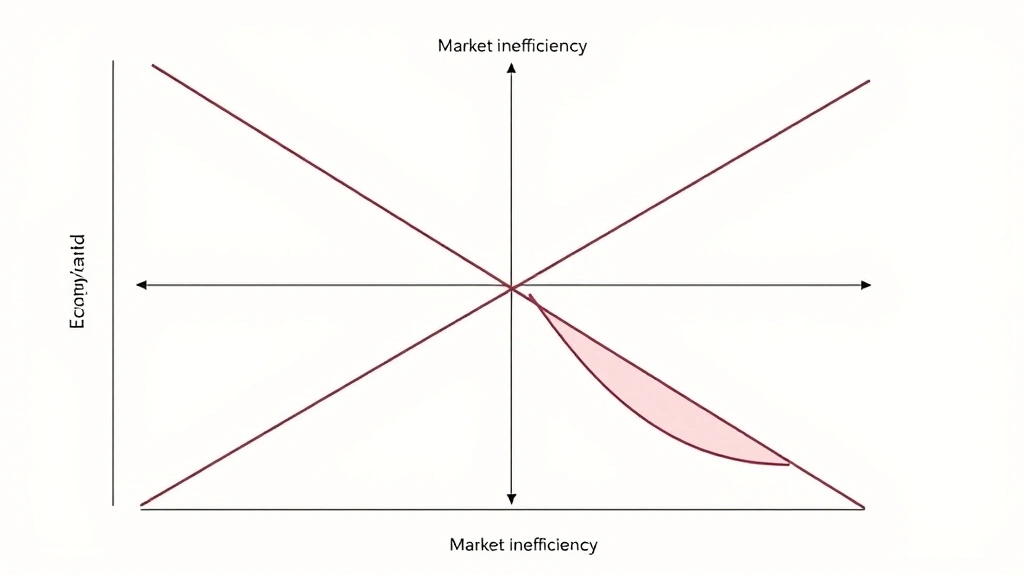
The most concrete way to measure allocative inefficiency is through deadweight loss—the loss of economic efficiency when equilibrium isn’t achieved. It’s literally money left on the table, value destroyed by not producing at the efficient quantity.
Deadweight loss in a monopoly appears as a triangle on supply-and-demand graphs, but it represents real human welfare. It’s the value that consumers would have gained from purchasing additional units at prices they’d willingly pay, minus the cost of producing those units. It’s also the producer surplus the monopolist forgoes by not selling at lower prices.
Research from Harvard Business Review has documented how monopolistic practices cost economies billions annually through such inefficiencies. In pharmaceutical markets alone, patent monopolies create deadweight loss estimated in the tens of billions of dollars yearly.
The fascinating part? Both consumers and the monopolist would potentially be better off if the monopolist could perfectly price discriminate—charging each customer their maximum willingness to pay. But they can’t, so society loses out.
Real-World Examples of Monopolistic Behavior
Monopolies aren’t just theoretical constructs. They exist throughout modern economies, and their allocative inefficiency has real consequences.
Technology Platforms: Companies like Microsoft in the 1990s held near-monopoly power in operating systems. They restricted interoperability and charged premium prices, producing less innovation and choice than a competitive market would have generated. Their behavior illustrates how allocative efficiency versus productive efficiency can diverge dramatically.
Pharmaceutical Patents: Drug companies holding patents on essential medications face no price competition. They produce quantities that maximize profit rather than maximize access. Insulin prices have tripled in recent decades despite minimal innovation, a textbook case of monopolistic underproduction.
Utilities: Regional monopolies in electricity, water, and natural gas provide essential services but often restrict expansion to underserved areas because the profit motive doesn’t align with universal coverage.
Cable and Internet: Many regions have only one or two internet service providers. These near-monopolies maintain high prices and slow service improvements compared to competitive markets in other regions.
Each example demonstrates the same principle: when firms have monopoly power, they produce less than the socially optimal quantity and charge more than the marginal cost of production.
Regulatory Solutions and Market Interventions
Governments have developed various approaches to address monopolistic allocative inefficiency:
- Price Controls: Regulators can mandate that prices not exceed marginal cost plus a reasonable profit margin. Utilities often face this type of regulation.
- Antitrust Action: Breaking up monopolies or preventing mergers that would create monopoly power restores competitive pressure and pushes firms toward allocatively efficient quantities.
- Patent Limitations: Shortening patent periods or creating exemptions for essential goods reduces monopoly duration and power.
- Subsidies for Public Goods: When monopolies underproduce socially valuable goods, governments can subsidize production to increase quantity toward the efficient level.
- Direct Production: Government agencies can produce goods and services directly, competing with or replacing monopolies.
According to research published in The American Economic Review, well-designed regulation can push monopolies significantly closer to allocatively efficient quantities without eliminating the profit incentives needed for innovation and investment.
The challenge is that regulations themselves create costs and can stifle beneficial innovation. The sweet spot involves enough regulation to prevent egregious inefficiency without so much that it eliminates incentives for improvement and growth.
Building Better Decision-Making Skills Around Economic Concepts
Understanding allocative efficiency in monopolies isn’t just about passing economics exams. It’s about developing the analytical frameworks that help you make better decisions in business, policy, and personal finance.
When you recognize how monopolies operate, you gain insight into market dynamics everywhere. You start seeing why certain industries have high barriers to entry, why some companies seem to charge unreasonable prices without losing customers, and why breaking up monopolies sometimes matters more than optimizing individual companies.
This connects to broader principles about improving work performance in any field. Whether you’re in business, policy, or analysis, understanding these economic principles helps you identify inefficiencies and opportunities. You learn to ask: “Is this market allocatively efficient, or is there value being left on the table?”
Similarly, understanding concepts like academic performance metrics alongside economic efficiency helps you think holistically about measurement and optimization. Just as monopolies optimize for profit at the expense of allocative efficiency, institutions sometimes optimize for measured metrics at the expense of actual effectiveness.
The deeper lesson: efficiency isn’t one-dimensional. A monopoly might be productive-efficient (making goods cheaply) while being allocatively inefficient (not producing the right quantity). In your own work and decisions, watch for similar misalignments between what’s being optimized and what actually matters.
Frequently Asked Questions
What exactly is allocatively efficient quantity?
Allocatively efficient quantity is the output level where price equals marginal cost, meaning the last unit produced is worth exactly what it costs to make. At this point, society gains maximum total benefit from resource allocation, and no reallocation could make someone better off without making someone else worse off.
Why don’t monopolies produce at allocatively efficient quantity?
Monopolies maximize profit where marginal revenue equals marginal cost, which occurs at a lower quantity than where price equals marginal cost. Since they can restrict supply to maintain high prices without facing competition, they choose underproduction to increase profit, even though it creates allocative inefficiency.
What’s the difference between allocative and productive efficiency?
Productive efficiency means making goods at the lowest possible cost—getting maximum output from given inputs. Allocative efficiency means producing the right quantity of goods that society values most. A monopoly might achieve productive efficiency while failing at allocative efficiency by producing too little at high cost per unit.
How much deadweight loss do monopolies typically create?
Deadweight loss varies dramatically by industry. In highly concentrated industries with high barriers to entry (pharmaceuticals, telecommunications), it can represent 5-15% of potential market value. In less concentrated markets, it’s typically smaller. The exact amount depends on demand elasticity and the monopoly’s pricing power.
Can regulation actually fix monopoly inefficiency?
Yes, but imperfectly. Price regulation, antitrust enforcement, and patent limitations can push monopolies closer to allocatively efficient quantities. However, poorly designed regulation can create its own inefficiencies, and there’s often a trade-off between eliminating monopoly rents and maintaining innovation incentives.
Is all monopoly bad for the economy?
Not necessarily. Some monopolies, particularly those based on innovation or network effects, can drive progress and efficiency despite allocative inefficiency. The question isn’t whether monopolies exist, but whether their benefits (innovation, scale) outweigh their costs (underproduction, high prices). This requires case-by-case analysis rather than blanket condemnation.


