
What Is Arcane Focus in 5E? Expert Guide to Mastering Magical Concentration
Dungeons & Dragons 5th Edition introduced a mechanic that fundamentally changed how spellcasters interact with their craft: the arcane focus. If you’ve ever sat at a gaming table wondering why your wizard clutches a crystal staff or your sorcerer fidgets with a specially prepared component pouch, you’re about to unlock one of the game’s most elegant—and often misunderstood—systems.
An arcane focus serves as a physical conduit for magical energy, allowing spellcasters to cast spells without carrying individual material components. Think of it as the difference between a sculptor needing individual tools versus having one masterfully crafted instrument that handles everything. It’s not just flavor; it’s a mechanical advantage that streamlines gameplay while maintaining the mystique of spellcasting.
Whether you’re a seasoned Dungeon Master, a new player building your first wizard, or someone curious about how D&D’s rules create meaningful character choices, this guide breaks down everything you need to know about arcane focuses in 5E. We’ll explore what they are, how they work mechanically, what types exist, and most importantly, how to leverage them strategically in your campaign.
What Exactly Is an Arcane Focus?
An arcane focus is a special object designed to channel magical energy. In game terms, it’s a material component substitute that allows spellcasters to cast spells requiring material components without actually carrying those components. The Player’s Handbook defines it as an object specifically crafted to focus magical energy—essentially a magical instrument that says, “I’ve got this covered,” to the universe.
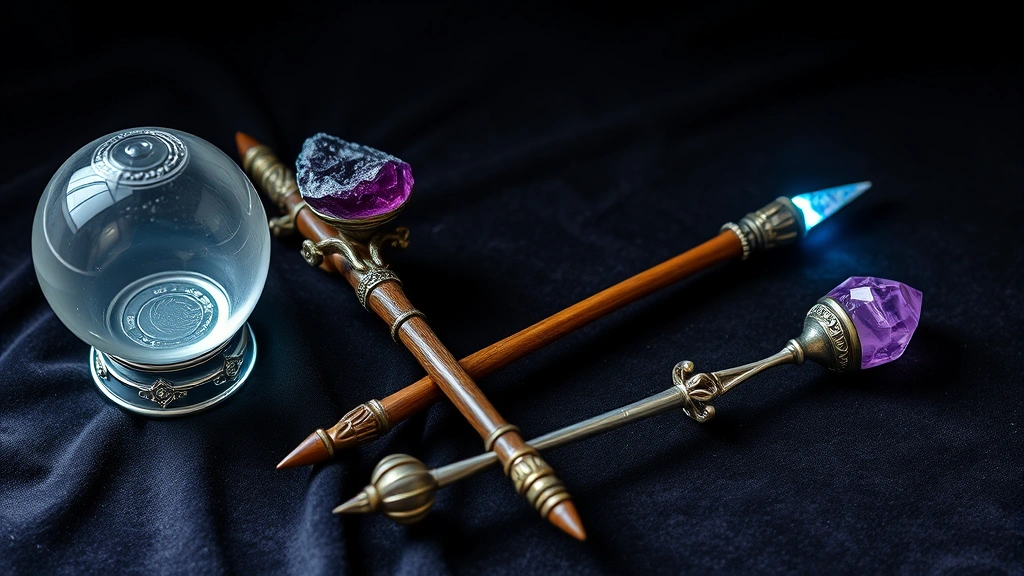
The beauty of an arcane focus lies in its versatility. A crystal ball, an orb, a staff, a wand, or even a specially prepared ring can serve this purpose. What matters isn’t the specific object but rather that your character has invested time and resources into making it a legitimate magical conduit. According to official D&D guidance, an arcane focus must be appropriate to the spellcaster’s tradition—a cleric uses a holy symbol, while a wizard uses something more arcane in nature.
Here’s where it gets interesting: an arcane focus doesn’t eliminate the need for material components entirely. Instead, it replaces components that have no monetary value and aren’t consumed by the spell. If a spell requires a diamond worth 300 gold pieces, your arcane focus won’t help you skip that expense. But if a spell just needs “a pinch of sulfur,” your focus handles it.
This distinction matters because it creates genuine strategic choices. You’re not getting a free pass on spell costs; you’re getting organizational efficiency. You’re choosing focus over chaos, preparation over improvisation. That’s thematically resonant and mechanically sound.
When you’re looking to optimize your magical practice, exploring our blog reveals how many spellcasters struggle with component management. The arcane focus solves this problem elegantly, letting you concentrate on what actually matters: casting powerful spells.

The Mechanical Rules Behind Arcane Focus
Let’s break down the actual mechanics, because understanding the rules prevents table arguments and awkward moments with your Dungeon Master.
The Core Rule: When you cast a spell that requires a material component that has no cost and isn’t consumed, you can use an arcane focus instead of providing that component. That’s it. That’s the fundamental mechanic.
What This Means in Practice:
- You cast Magic Missile, which requires a tiny propellant (like gunpowder). Your focus handles this. No need to track gunpowder.
- You cast Fireball, which requires a tiny ball of bat guano and sulfur. Your focus handles this. No tracking needed.
- You cast Identify, which requires an owl feather or an agate. Your focus handles this.
- You cast Resurrection, which requires diamonds worth 25,000 gold pieces. Your focus does NOT handle this. You need those diamonds.
The Dungeon Master’s Guide emphasizes that spells with costly components remain costly. Your focus doesn’t make you wealthy; it makes you organized. This is crucial because it prevents the arcane focus from becoming a “solve everything” item.
According to D&D Beyond’s rules compendium, an arcane focus must be held in one hand while casting, unless you have the War Caster feat. This creates positioning challenges in combat. You can’t hold a shield, a weapon, and your focus simultaneously unless you’re clever about it. This limitation maintains balance and forces meaningful tactical decisions.
Interestingly, many players overlook how this connects to broader focus principles. Just as our adjustable focus systems help professionals maintain concentration, an arcane focus helps spellcasters maintain their magical concentration in chaotic situations.
The Somatic Component Consideration: Your focus doesn’t replace somatic components (hand gestures). You still need free hands to cast spells with somatic components. This is why rogues stealing your component pouch creates tension—you lose nothing functionally, but thieves might not know that. It’s good roleplay material.
Types of Arcane Focuses in 5E
Not all arcane focuses are created equal. The Player’s Handbook lists several official types, each with distinct characteristics and thematic appeal.
Crystal or Gem: The classic choice. A polished crystal, gemstone, or combination thereof serves as your magical conduit. These appeal to wizards and sorcerers who appreciate precision and clarity. Mechanically, they function identically to other focuses, but the imagery is powerful—a wizard with a crystal staff feels right.
Orb: A sphere of crystal, glass, or metal. Think scrying orbs and fortune tellers. Mechanically identical to other focuses, but narratively distinct. An orb suggests mystery and ancient knowledge, making it perfect for wizards studying forbidden magic or sorcerers with mysterious bloodlines.
Rod: A thin, rigid focus. Slightly more martial than other options, rods appeal to spellcasters who see themselves as warriors first, magic users second. Mechanically the same, but thematically distinct.
Staff: The most versatile and visually striking option. A staff can be ornate or simple, wooden or metal, topped with a crystal or adorned with runes. Staffs appeal to experienced spellcasters who’ve invested in their craft. They also grant a mechanical advantage: staffs can be used as a quarterstaff (1d6 or 1d8 bludgeoning damage), making them dual-purpose tools.
Wand: A slender focus, typically 12-15 inches long. Wands suggest precision and control. They’re popular with wizards and warlocks. Some wands have special properties (like storing spell slots), but a basic wand functions like any other focus.
Holy Symbol (for Clerics and Paladins): While technically different from wizard focuses, holy symbols serve the same mechanical purpose for divine spellcasters. They’re worn, held, or depicted on shields. A holy symbol might be an amulet, a pendant, or a religious icon.
The thematic choice matters less than your commitment to the choice. Pick a focus that resonates with your character’s identity. If your wizard loves studying at our academic performance index, maybe their focus is a scholar’s crystal, inscribed with notes from their studies.
Arcane Focus vs. Component Pouch: Which Should You Choose?
Here’s where many players face genuine confusion: you can use either an arcane focus OR a component pouch to handle material components. They’re mechanically equivalent. So which should you choose?
The Component Pouch Advantage: A component pouch is cheaper (25 gold pieces versus 5-100+ gold depending on your focus choice). It doesn’t require a hand to use—you can keep both hands free for weapons, shields, or balance. You can access it while restrained (depending on DM interpretation). It’s the practical choice for adventurers who prioritize flexibility over aesthetics.
The Arcane Focus Advantage: An arcane focus is thematically powerful. It’s a character statement. A wizard’s staff isn’t just mechanical; it’s identity. A focus can be enchanted into a magical item later (your staff might become a Staff of Power). Most importantly, a focus forces you to commit to your magical identity. It says, “I am a spellcaster,” in a way a pouch doesn’t.
There’s also psychological research suggesting that physical focus objects enhance cognitive performance. Your wizard’s staff isn’t just flavor—it’s a psychological anchor that helps maintain concentration during complex casting.
The Practical Answer: Choose based on your campaign’s tone and your character’s role. Adventurers who expect frequent combat and disarming might prefer pouches. Wizards in academic settings might prefer staffs. Warlocks making deals with eldritch entities might prefer mysterious orbs. The “correct” choice is the one that fits your story.
Many experienced players maintain both—a focus for roleplay and a pouch as backup. Your DM might allow this compromise, creating redundancy that prevents awkward situations.
Building Focus Into Your Character Strategy
An arcane focus isn’t just mechanical; it’s strategic. Smart players integrate their focus choice into broader character planning.
Combat Positioning: Your focus requires a free hand. This means you need to think about positioning. Can you keep your focus hand free while maintaining tactical flexibility? A staff-wielding wizard might hold the staff in both hands, preventing shield use. A wand-wielding wizard can keep one hand free for a dagger. These decisions matter in combat.
Disarming Tactics: Enemies can target your focus. If you’re disarmed, you lose your focus temporarily. Enemies might deliberately target your focus to limit your casting. This creates interesting tactical moments—do you recover your focus, or do you switch to a component pouch you brought as backup? Smart preparation prevents panic.
Magical Item Integration: Many magical items are focuses. As you advance in levels, your mundane focus might become a magical one. A staff might become a Staff of Fire. A wand might become a Wand of Fireballs. Building focus choice into character strategy means planning for this progression.
Narrative Integration: Your focus tells your story. A wizard’s staff carved from an ancient tree suggests different background than a crystal focus suggests. A sorcerer’s focus might be a family heirloom, connecting to their bloodline. When you integrate focus into your narrative, the mechanical choice becomes meaningful roleplay.
Think of how maintaining consistent focus—both mechanical and narrative—improves your gaming experience. It’s similar to how application performance tools help professionals maintain consistency in their work. Your character’s focus does the same thing: it maintains consistency between mechanics and narrative.
Common Mistakes and How to Avoid Them
Mistake 1: Assuming Your Focus Eliminates All Material Component Costs
Many new players think an arcane focus makes material components disappear. Wrong. It only replaces components with no cost that aren’t consumed. Expensive components still cost money. Your focus doesn’t make 25,000 gold pieces of diamonds appear. This mistake leads to awkward moments when your DM says, “You don’t have those diamonds,” and your character can’t cast Resurrection. Solution: read the spell description carefully. If it lists a cost in gold, you need that cost. Your focus doesn’t help.
Mistake 2: Forgetting Your Focus Requires a Free Hand
You hold your focus, then equip a sword and shield, then wonder why your DM says you can’t cast spells. You can’t—both hands are occupied. Solution: plan your equipment load-out. Choose between weapon-and-shield or focus-and-weapon. The War Caster feat solves this by letting you use your focus while holding weapons, but you need that feat first.
Mistake 3: Not Considering Disarming Tactics
Enemies can disarm you, removing your focus and preventing spell casting (unless you have a backup). This isn’t punishment; it’s strategy. Solution: carry a component pouch as backup. Yes, you chose a focus for aesthetic reasons, but pragmatism suggests redundancy.
Mistake 4: Choosing a Focus Inconsistent with Your Class
Clerics use holy symbols. Wizards use arcane focuses like staffs or wands. Sorcerers typically use focuses but can use component pouches. Choosing a holy symbol as a wizard’s focus confuses everyone. Solution: use the appropriate focus type for your class. This isn’t mechanical restriction—it’s narrative clarity.
Mistake 5: Ignoring Focus Upgrades as You Level
Your mundane focus might become a magical item. Planning for this creates satisfying character progression. Solution: discuss with your DM about potential magical focus upgrades. This creates campaign moments where your focus becomes genuinely powerful.
Research from Harvard Business Review on focus strategies suggests that clear intentions prevent mistakes. In D&D, clear focus intentions (what your focus does, what it doesn’t do, how you’ll use it) prevent common errors.
Frequently Asked Questions
Can my arcane focus be destroyed or lost?
Yes. Your focus is an object with hit points and durability. Enemies can target it. You can lose it. This is why backup plans matter. A component pouch serves as excellent insurance. Magical focuses have higher durability, making them better long-term investments as you level up.
Do I need to attune to my arcane focus?
No. A mundane focus requires no attunement. Some magical focuses do require attunement, but that’s a property of the magical item, not the focus itself. Check your specific item’s description.
Can I use a focus as a weapon?
Depends on the focus type. Staffs can be used as quarterstaffs (1d6 or 1d8 bludgeoning). Other focuses can’t. Some magical focuses have special properties that allow weapon use. Check your specific focus.
What happens if I’m silenced? Does my focus help?
No. Silence prevents verbal components. Your focus handles material components. If you’re silenced, you can’t cast spells with verbal components, regardless of your focus. Silence is a hard counter to spellcasting, not something focus solves.
Can I use my focus while grappled or restrained?
Depends on DM interpretation. Most DMs rule that if your focus hand is free, you can use it. If you’re grappled by both arms, you can’t. This creates interesting tactical moments where you need to escape grapples to cast spells.
Is there a difference between focuses for different classes?
Functionally, no. Mechanically, all focuses work the same way. Thematically and narratively, yes. A cleric’s holy symbol differs from a wizard’s staff. The mechanical function is identical, but the roleplay context differs.
Can I have multiple focuses?
Technically yes, but you can only use one at a time. Having multiple focuses creates interesting narrative possibilities—maybe you have a traveling focus and a ceremonial focus. Mechanically, only one active focus matters.


