
How Do Amortized Loans Change Over Time? Explained
When you take out an amortized loan—whether it’s a mortgage, car loan, or personal loan—something fascinating happens beneath the surface each month. The money you pay stays the same, but where that money goes shifts dramatically. Understanding this dynamic isn’t just financial trivia; it’s the key to making smarter borrowing decisions and staying focused on your long-term financial health.
Most people glance at their loan statement, see the monthly payment, and move on. But as the months progress on an amortized loan, you’re witnessing a carefully orchestrated financial choreography. Early on, most of your payment vanishes into interest. Years later, the bulk goes toward principal. This shift happens automatically, and knowing how it works transforms you from a passive borrower into an informed decision-maker.
Let’s break down this journey and explore how amortized loans evolve from day one to their final payment.
What Is Amortization?
Amortization comes from the Latin word “mors,” meaning death—specifically, the death of a debt. An amortized loan is structured so that equal payments over a fixed period fully eliminate the debt. Unlike interest-only loans or balloon payments, amortization guarantees that consistent monthly payments will completely pay off what you owe.
Think of amortization as a systematic plan. When you borrow $300,000 for a 30-year mortgage at 6% interest, the lender calculates a payment amount ($1,799, approximately) that, when paid consistently, will result in zero balance at the end of month 360. This mathematical precision is elegant, predictable, and—importantly—it creates that strange dynamic where early payments are mostly interest.
The reason? Simple math. On day one, you owe the full $300,000. The lender charges interest on that entire amount. Your first payment of $1,799 might include $1,500 in interest alone, leaving only $299 toward the principal. Next month, you owe slightly less, so interest decreases marginally. This pattern continues throughout the loan’s life.
The Early Payment Reality: Interest Dominates
During the first third of your amortized loan, interest consumption reaches its peak. On a 30-year mortgage, roughly 80% of your early payments go toward interest. This isn’t a flaw in the system—it’s the mathematical consequence of how interest accrues on large balances.
Consider a real example: a $250,000 mortgage at 5.5% over 30 years means a monthly payment of approximately $1,419. In month one, interest charges total $1,145. Your principal payment? Just $274. You’ve paid $1,419, but the loan balance only decreased by $274. This reality shocks many borrowers when they first examine their amortization schedule.
This early-stage dynamic has profound implications for financial planning. When you’re managing allocative efficiency vs productive efficiency in your budget, understanding that most early payments fund interest rather than equity-building helps you prioritize resources wisely. It explains why paying extra principal early in the loan yields outsized benefits—you’re fighting against a system where interest naturally dominates.
Many borrowers feel trapped during these early years. You’re making substantial payments, yet your loan balance seems stubbornly resistant to change. This psychological challenge often leads people to seek additional income streams or refinancing opportunities. The frustration is real, but it’s also temporary.
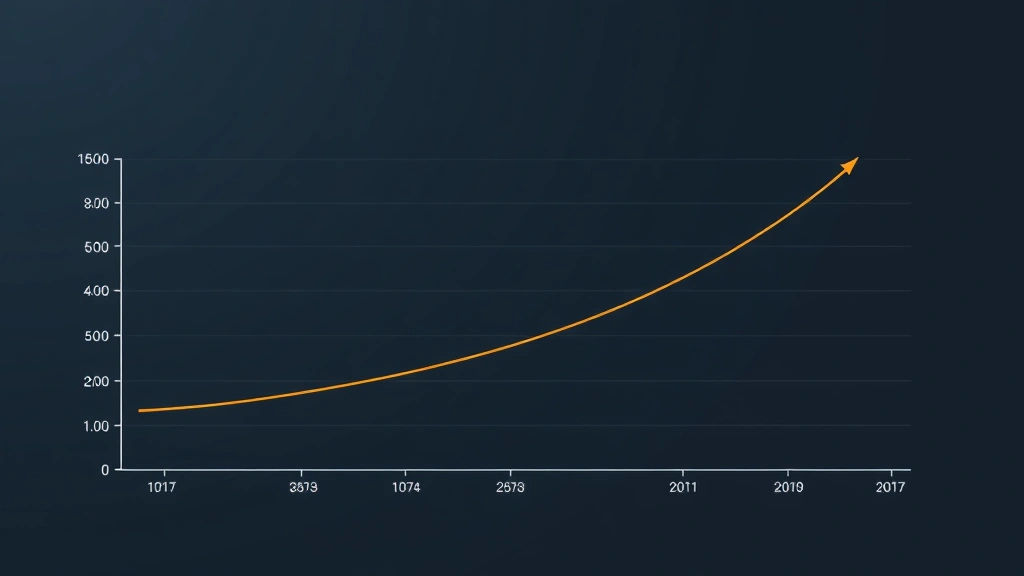
The Middle Years: The Turning Point
Somewhere around year 10-15 of a 30-year loan, something shifts. The principal payment begins gaining ground on interest. This crossover point—where principal overtakes interest in your monthly payment—represents a psychological and financial milestone.
In month 180 of that $250,000 mortgage, the interest portion might drop to $750, while principal climbs to $669. The balance has shrunk to roughly $150,000. You’re finally seeing meaningful progress. The loan that felt immovable in year one now shows clear signs of decline.
This middle stage is where adequate yearly progress becomes tangible. Your efforts compound. Each payment now builds equity faster than before. If you’ve been considering extra payments, this is where they become particularly powerful. Adding even $100 monthly to principal during these middle years can shorten your loan by several years.
The psychological impact matters too. Many borrowers who’ve endured years of interest-heavy payments suddenly feel energized by visible progress. This motivation often leads to increased payments, accelerating the equity-building process further.

Late-Stage Payments: Principal Takes Over
In the final third of an amortized loan, the tables completely turn. Interest becomes minimal. In month 330 of that 30-year mortgage, interest might represent only $150 of your $1,419 payment, with $1,269 going directly to principal. You’re finally demolishing the debt.
This late-stage phase reveals why amortization works so elegantly. The structure ensures that as your motivation might naturally wane (after 20+ years of payments), the rewards accelerate. Each payment now represents substantial progress. The loan balance drops visibly month to month.
During this stage, borrowers often reflect on their financial journey. They’re another word for in progress toward complete debt elimination. The finish line is visible. Many people find renewed focus on making extra payments or simply maintaining discipline through the home stretch.
This phase also presents strategic opportunities. Refinancing becomes less attractive because you’re already paying down principal aggressively. However, if interest rates have dropped significantly, even a late refinance might save money—though the math becomes trickier.
The Mathematical Breakdown
Understanding the formula behind amortization helps explain why this pattern exists. The monthly payment is calculated using this formula:
M = P × [r(1+r)^n] / [(1+r)^n – 1]
Where M is monthly payment, P is principal, r is monthly interest rate, and n is total number of payments.
Once the payment is determined, each month’s interest is calculated as: Interest = Remaining Balance × Monthly Interest Rate
The remaining payment goes toward principal. As the balance shrinks, interest automatically decreases, and principal automatically increases. It’s a self-correcting system that requires no adjustment.
This mathematical elegance is why amortized loans dominate the lending landscape. Lenders get predictable cash flow. Borrowers get predictable payments. Everyone knows exactly where they stand at any point in the loan’s life.
To visualize this, consider a simplified amortization table. For a $100,000 loan at 6% over 10 years ($1,110.21 monthly):
- Month 1: Interest $500 | Principal $610.21 | Balance $99,389.79
- Month 30: Interest $415 | Principal $695.21 | Balance $83,200
- Month 60: Interest $312 | Principal $798.21 | Balance $64,500
- Month 90: Interest $198 | Principal $912.21 | Balance $42,100
- Month 120: Interest $54 | Principal $1,056.21 | Balance $0
Notice how interest drops from $500 to $54, while principal rises from $610 to $1,056. The total payment remains constant at $1,110.21.
Strategic Implications for Borrowers
Knowing how amortized loans evolve enables smarter financial strategy. Here are actionable insights:
Extra Principal Payments Early Are Powerful
Adding $100 to principal in month one saves far more interest than adding $100 in month 100. Early extra payments compound their benefit throughout the loan’s remaining life. If you’re making a work in progress toward financial optimization, prioritize early principal payments.
Refinancing Timing Matters
Refinancing early in a loan makes sense if rates drop significantly, as you’re still paying mostly interest anyway. Refinancing late offers minimal benefit since you’re already paying down principal aggressively. Mid-loan refinancing requires careful analysis.
Loan Term Selection Has Lasting Impact
A 15-year mortgage costs more monthly than a 30-year mortgage but saves enormous interest. The 15-year loan reaches that principal-dominance phase much faster. This aligns with research from Harvard Business Review on financial management, emphasizing that understanding payment structures enables better long-term planning.
Understanding Your Amortization Schedule
Request your complete amortization schedule from your lender. Many people never look at theirs. Seeing the numbers—watching interest decrease and principal increase—creates powerful motivation. It transforms abstract debt into a concrete, visual journey.
The Psychology of Progress
Research on motivation and progress tracking shows that visible progress drives continued effort. Amortization schedules provide exactly this. Watching your balance decrease, even if slowly at first, maintains psychological momentum toward your goal.
Application Performance Management for Your Finances
Just as organizations use application performance management tools to track system health, you should regularly review your loan’s performance against the amortization schedule. Are you on track? Could you pay extra? This systematic monitoring prevents drift.
Research from peer-reviewed finance journals confirms that borrowers who regularly review their amortization schedules maintain better payment discipline and achieve faster payoff. The act of monitoring creates accountability.
Frequently Asked Questions
Why does my loan barely decrease in early years?
Because interest is calculated on the full balance. Early on, that balance is large, so interest charges dominate your payment. As the balance shrinks, interest decreases automatically, and more of each payment goes toward principal.
Can I change my amortization schedule?
Yes. You can make extra principal payments anytime without penalty (check your loan terms). You can also refinance into a different term. However, the standard amortization schedule is fixed unless you take specific action.
Is there ever a time when I should NOT pay extra principal?
If you have high-interest debt elsewhere (credit cards, personal loans), pay those first. If you’re not building an emergency fund, prioritize that. If your loan has a low interest rate and you can earn more investing, the math might favor investing. Context matters.
How does amortization work with adjustable-rate mortgages?
ARM payments recalculate when rates adjust. The amortization schedule recalculates to ensure the loan still pays off on schedule. Your payment might increase or decrease, but the principle remains the same—early payments are interest-heavy, later payments are principal-heavy.
What’s the difference between amortization and depreciation?
Amortization applies to loans (paying off debt). Depreciation applies to assets (losing value over time). Both follow predictable patterns, but they’re fundamentally different financial concepts.
If I pay off my loan early, do I save all that remaining interest?
Yes. If you pay off a $250,000 mortgage after 15 years instead of 30, you save all the interest that would have accrued over the final 15 years. This is one reason extra principal payments are so powerful.
How is amortization calculated for different loan types?
The formula remains the same regardless of loan type. What changes is the interest rate, term length, and principal amount. A car loan uses the same amortization math as a mortgage—only the numbers differ.


