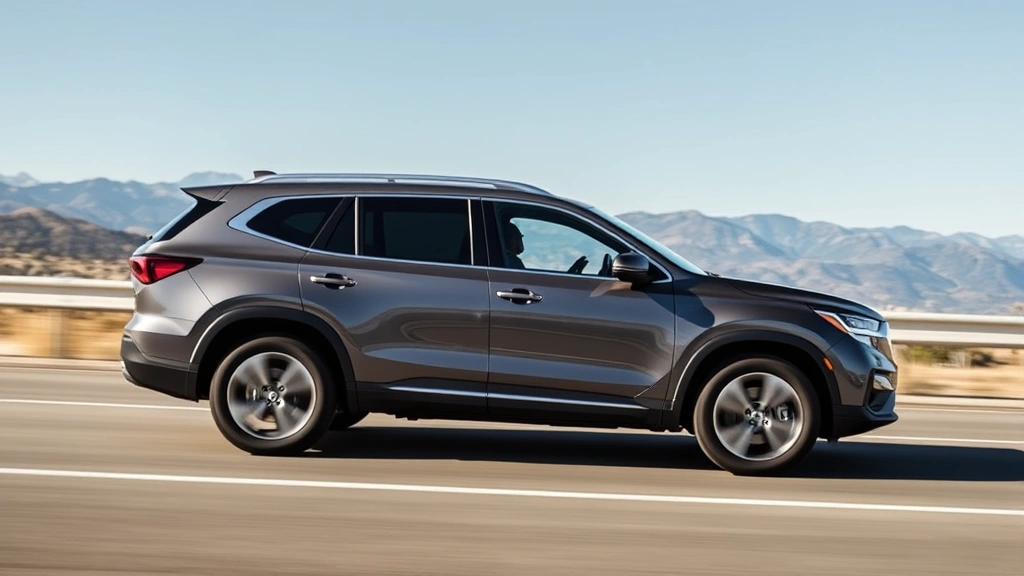
Best Fuel Efficient 7 Passenger SUVs: Top Picks for 2023
Finding the right seven-passenger SUV that doesn’t drain your wallet at the pump is like searching for a needle in a haystack—except the haystack costs $50,000 and seats your entire family. The challenge isn’t whether these vehicles exist; it’s identifying which ones actually deliver on fuel economy promises without sacrificing the space and comfort you need.
The SUV market has transformed dramatically over the past few years. Gone are the days when “fuel-efficient” and “three-row SUV” were mutually exclusive terms. Modern engineering, hybrid technology, and smarter design have created a sweet spot where practicality meets reasonable fuel consumption. Whether you’re commuting daily or planning weekend adventures, understanding your options can save you thousands in gas expenses over the vehicle’s lifetime.
This guide walks you through the best fuel-efficient seven-passenger SUVs available in 2023, breaking down their actual performance, features, and real-world considerations that matter to families and professionals alike.
Why Fuel Efficiency Matters in Seven-Passenger SUVs
Seven-passenger SUVs represent a significant investment. Most models start around $35,000 and easily climb into the $60,000+ range for well-equipped versions. That initial purchase price, however, pales in comparison to lifetime fuel costs. A vehicle that achieves 20 MPG versus 25 MPG over 200,000 miles translates to roughly $8,000 in additional fuel expenses—money that could fund college tuition, home improvements, or retirement contributions.
Beyond the financial argument, fuel efficiency connects directly to your environmental footprint and driving convenience. Less frequent fill-ups mean more time doing what matters and fewer carbon emissions contributing to climate change. For families managing tight budgets or environmentally conscious consumers, this distinction becomes increasingly important.
The real conversation isn’t about sacrifice anymore. Modern fuel-efficient four-wheel-drive SUVs prove that capability and economy aren’t opponents. They’re partners in smart vehicle selection.
The Hybrid Leaders: Maximum Efficiency
Toyota Highlander Hybrid remains the gold standard in this category, delivering an impressive 35 MPG combined in some configurations. The Highlander Hybrid combines Toyota’s proven reliability with genuine fuel savings that owners actually experience in real-world driving. The third-row seating feels less cramped than competitors, and the hybrid system operates seamlessly without requiring driver adjustment or special maintenance routines.
Key advantages include:
- Consistent 34-36 MPG combined across most driving conditions
- Excellent resale value and low maintenance costs
- Quiet cabin during low-speed city driving
- Standard all-wheel drive on most trims
- Proven track record spanning multiple generations
Honda Odyssey Hybrid represents an interesting alternative, though technically a minivan rather than SUV. For families prioritizing maximum passenger comfort and fuel economy over traditional SUV styling, the Odyssey delivers exceptional practicality with 36 MPG combined ratings. The hybrid system operates transparently, and the sliding doors eliminate the constant door-ding problems that plague traditional SUVs in parking lots.
Research from Consumer Reports confirms that hybrid three-row vehicles typically achieve 30-35% better fuel economy than their gasoline counterparts, making the hybrid premium ($4,000-$6,000) recoverable within four to six years of typical driving.
Lexus RX 350L Hybrid occupies the luxury segment, offering premium materials, refined driving dynamics, and 31 MPG combined. If your budget accommodates luxury pricing, the RX delivers sophisticated engineering with genuine efficiency gains. The third row accommodates adults better than most competitors, though cargo space becomes limited when all seats are occupied.

Traditional Contenders with Strong MPG
Not everyone needs or wants hybrid technology. Some drivers prefer traditional gasoline engines for their simplicity, lower upfront costs, and straightforward maintenance. Several excellent options deliver respectable fuel economy in the 24-27 MPG combined range.
Kia Sorento punches above its weight class with competitive pricing and genuine efficiency. Recent generations achieve 26-28 MPG combined with the turbocharged four-cylinder engine. Kia’s warranty coverage provides peace of mind, and the interior quality has improved dramatically compared to earlier models.
Hyundai Santa Fe shares mechanical DNA with the Sorento while offering slightly different styling and feature sets. The turbocharged engine provides adequate power without excessive fuel consumption, achieving similar 26-27 MPG combined figures. Hyundai’s reliability ratings have climbed significantly, making these vehicles increasingly attractive to value-conscious buyers.
For those interested in optimizing their driving efficiency, understanding tire selection and its impact on fuel economy proves valuable. Quality all-season tires reduce rolling resistance and improve efficiency compared to budget alternatives.
Mazda CX-9 brings driving engagement to the three-row SUV segment while maintaining reasonable fuel economy at 25-26 MPG combined. Mazda’s focus on driving dynamics means the CX-9 actually feels enjoyable on winding roads, not just practical for family hauling. The second and third rows provide adequate space without feeling cramped, and the overall quality justifies the slightly higher price point.
Toyota 4Runner deserves mention for buyers prioritizing capability and durability. While achieving only 21-23 MPG combined, the 4Runner’s legendary reliability and resale value offset fuel costs for buyers with serious off-road intentions. This vehicle makes sense for those regularly towing, traversing rough terrain, or requiring maximum durability over fuel economy.
Diesel Options for Long-Distance Hauling
Diesel engines have become increasingly available in the American market, offering advantages for specific driving patterns. If you regularly tow heavy loads or drive extensive highway miles, diesel efficiency can prove compelling.
Volkswagen Atlas offers a turbocharged diesel option delivering 23-24 MPG combined while providing substantial towing capacity (5,000+ pounds). The diesel engine’s torque makes highway merging and passing feel effortless, and the long-distance efficiency advantage compounds on road trips exceeding 500 miles.
However, diesel considerations extend beyond MPG figures. Fuel availability in rural areas, higher upfront costs ($3,000-$5,000 premium), and different maintenance requirements (diesel particulate filters, diesel exhaust fluid) affect the total ownership equation. Diesel makes most sense for buyers with predictable, high-mileage driving patterns.
For those managing household expenses strategically, considering overall efficiency—whether financial, operational, or environmental—parallels broader concepts like understanding efficiency metrics in other industries. Smart consumers evaluate efficiency across multiple dimensions.
Balancing Performance and Efficiency
The fundamental tension in vehicle selection involves competing priorities. Maximum efficiency sometimes sacrifices acceleration, towing capacity, or driving responsiveness. Conversely, prioritizing performance typically means accepting fuel economy compromises.
Modern engineering has narrowed this gap considerably. Turbocharged engines provide responsive acceleration while maintaining efficiency through cylinder deactivation and direct injection. Hybrid systems eliminate the “slow and sluggish” reputation of earlier fuel-efficient vehicles. Continuously variable transmissions (CVTs) optimize engine RPM for fuel economy without the delayed response of older automatic transmissions.
The practical reality: seven-passenger SUVs inherently involve tradeoffs. You’re moving 4,500+ pounds of vehicle, three rows of seats, and cargo space. Achieving 35 MPG with a minivan is achievable; achieving the same with a traditional SUV frame requires hybrid technology. Understanding your actual priorities—how often you use that third row, typical driving patterns, towing requirements—clarifies which tradeoff makes sense for your situation.
Think about how efficiency operates differently across contexts. A vehicle that’s perfectly efficient for one driver’s situation might be wasteful for another’s. Your specific needs determine the optimal choice.
Practical Tips to Maximize Your Fuel Economy
Vehicle selection represents just the first step. Driving habits, maintenance practices, and operational choices significantly impact actual fuel economy regardless of which vehicle you select.
Maintenance Fundamentals
- Regular oil changes: Fresh oil reduces engine friction and improves efficiency by 1-2%
- Proper tire pressure: Under-inflated tires increase rolling resistance and reduce MPG by up to 3% per PSI below recommended pressure
- Air filter replacement: Restricted air filters force engines to work harder, reducing efficiency
- Wheel alignment: Misaligned wheels create drag and reduce fuel economy
Driving Habit Optimization
- Accelerate gradually rather than aggressively—jackrabbit starts consume 40% more fuel than smooth acceleration
- Maintain steady highway speeds; every 5 MPH over 50 MPH reduces efficiency by approximately 7%
- Minimize idle time; modern engines use less fuel restarting than idling for more than 10 seconds
- Remove unnecessary weight; every 100 pounds of cargo reduces MPG by approximately 1%
- Plan efficient routes reducing stop-and-go city driving when possible
Quality energy-efficient accessories extend beyond home applications. Roof racks create aerodynamic drag; removing unused racks improves efficiency. Window tinting reduces air conditioning load on hot days. These small optimizations compound over months and years of driving.
Technology Integration
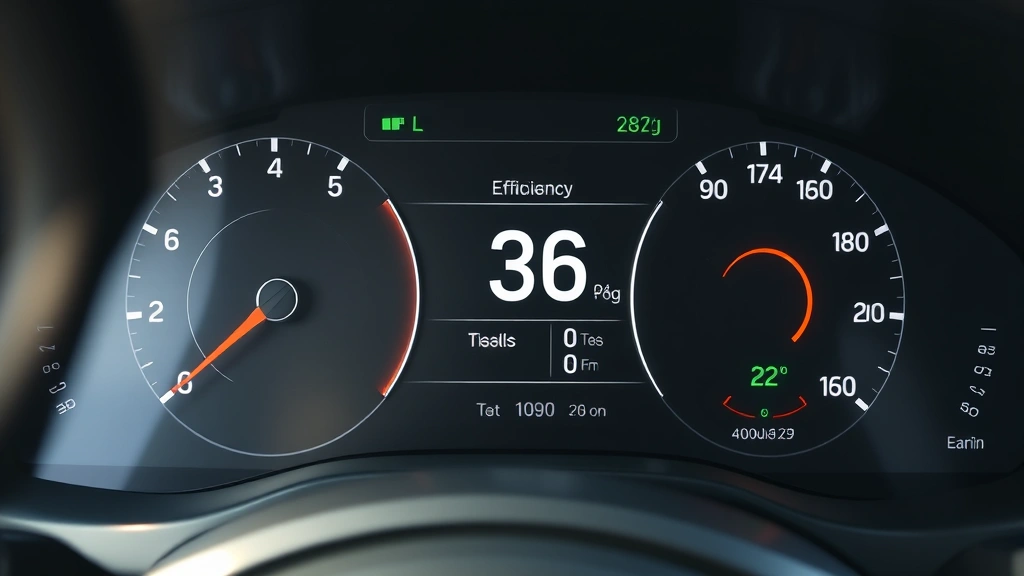
Many 2023 models include fuel economy displays and real-time MPG feedback. These tools prove surprisingly effective; drivers who monitor efficiency typically improve MPG by 5-10% through behavioral adjustments. Some vehicles offer “eco modes” that adjust throttle response and transmission shifting for maximum efficiency on specific trips.
Frequently Asked Questions
What’s the difference between EPA-estimated and real-world fuel economy?
EPA estimates use standardized testing procedures that don’t perfectly reflect typical driving. Real-world economy usually runs 10-20% lower than EPA figures due to aggressive driving, traffic congestion, cold weather, and cargo loads. The Highlander Hybrid’s EPA estimate of 35 MPG combined might yield 30-33 MPG in actual ownership. This variance is normal and doesn’t indicate vehicle problems.
Are hybrid seven-passenger SUVs worth the higher upfront cost?
For most buyers driving 12,000+ miles annually, hybrid premiums recover within 4-6 years through fuel savings. Beyond that timeframe, the savings become pure benefit. Additionally, hybrids typically command higher resale values and often qualify for tax incentives or HOV lane privileges in certain states. If you plan keeping the vehicle 7+ years, hybrid economics become compelling.
How does towing capacity relate to fuel efficiency?
Towing dramatically reduces fuel economy—typically 20-30% depending on trailer weight and aerodynamics. A vehicle achieving 26 MPG unloaded might drop to 18-20 MPG while towing. If regular towing is necessary, prioritizing towing capacity over fuel economy makes sense. If towing is occasional, maximizing efficiency becomes the better choice.
Should I consider a minivan instead of a seven-passenger SUV?
Minivans typically achieve 5-8 MPG better economy than comparable SUVs and offer superior interior flexibility with sliding doors and flat floors. However, SUVs provide better winter traction, off-road capability, and generally command higher resale values. The choice depends on whether you prioritize maximum efficiency and practicality (minivan) or capability and resale value (SUV).
What maintenance costs differ between hybrid and traditional engines?
Hybrid systems require specialized service, though major components carry lengthy warranties (8 years/100,000 miles typically). Brake service differs due to regenerative braking extending pad life. Battery replacement, while expensive ($5,000-$15,000), rarely occurs within typical ownership periods. Overall, hybrid maintenance costs remain competitive with traditional engines when warranty coverage is factored in.
Does driving style really impact fuel economy significantly?
Absolutely. Aggressive acceleration, excessive speeding, and poor route planning can reduce fuel economy by 20-30% compared to optimized driving. A driver achieving 20 MPG through aggressive habits could reach 26 MPG with behavioral adjustments—equivalent to a 30% efficiency gain without vehicle changes. This represents the single largest controllable factor in fuel economy.
Are there government incentives for purchasing fuel-efficient SUVs?
Federal tax credits exist for certain hybrid and electric vehicles, though availability changes annually and eligibility varies by vehicle model and buyer income. State-level incentives differ dramatically; some states offer HOV lane access for hybrids, registration discounts, or direct purchase rebates. Check current fuel economy resources and your state’s environmental agency for current incentive programs.
How do I evaluate total cost of ownership beyond MPG?
True cost analysis includes purchase price, fuel costs, maintenance expenses, insurance premiums, depreciation, and potential repairs. Websites like Edmunds provide detailed ownership cost calculators factoring these variables. A slightly more expensive vehicle with superior reliability and resale value might cost less over five years than a cheaper alternative requiring expensive repairs.


