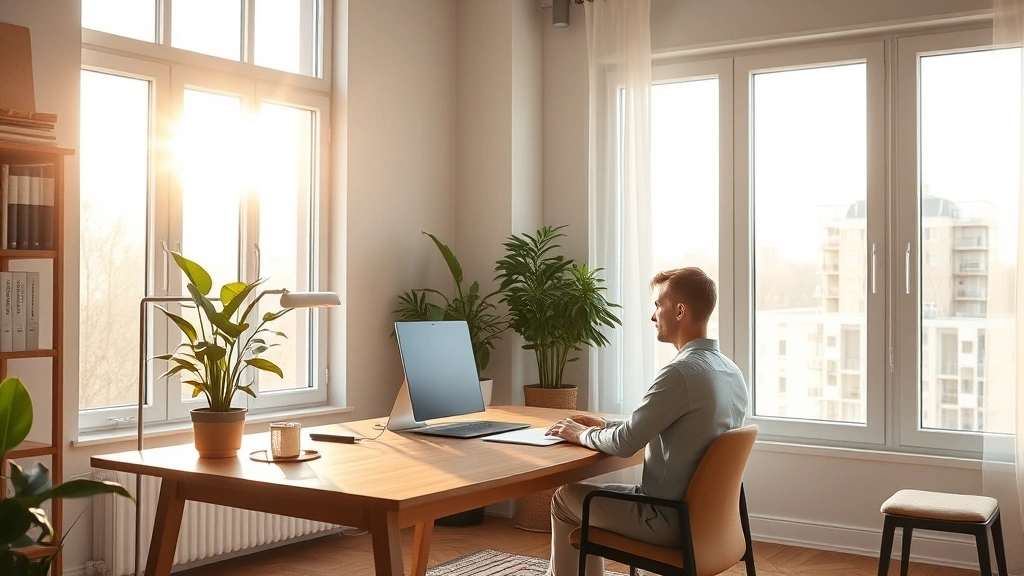
How Do Calming Spaces Boost Focus? Expert Insights on Creating Your Ideal Work Environment
Your environment profoundly influences your ability to concentrate. Neuroscience research demonstrates that calming spaces significantly enhance focus, reduce mental fatigue, and improve overall cognitive performance. When your surroundings promote tranquility rather than stimulation, your brain allocates more resources to deep work instead of processing environmental stress signals.
The relationship between environmental design and mental performance has evolved from anecdotal observation to rigorous scientific study. Researchers at the University of Michigan and other leading institutions have documented how thoughtfully designed spaces can lower cortisol levels, reduce anxiety, and create optimal conditions for sustained attention. Whether you work from home, in an office, or in hybrid settings, understanding how to construct calming spaces becomes essential for maximizing productivity and protecting your mental health.
This comprehensive guide explores the science behind calming environments, practical strategies for implementation, and expert recommendations for transforming any space into a focus-enhancing sanctuary.

The Neuroscience of Calming Spaces
When you enter a chaotic or overstimulating environment, your amygdala—the brain’s threat-detection center—activates immediately. This triggers the release of stress hormones including cortisol and adrenaline, preparing your body for fight-or-flight responses. While this mechanism served our ancestors well, in modern work environments it exhausts cognitive resources and fragments attention.
Research published in the Proceedings of the National Academy of Sciences reveals that exposure to calming environmental stimuli activates the parasympathetic nervous system—your body’s “rest and digest” mode. This physiological shift enables:
- Enhanced prefrontal cortex activation, improving executive function and decision-making
- Increased alpha brain wave production, associated with relaxed alertness
- Improved working memory capacity through reduced cognitive load
- Better emotional regulation and stress resilience
- Sustained attention for extended periods without mental depletion
The prefrontal cortex, responsible for planning, reasoning, and sustained concentration, functions optimally when your nervous system feels secure. Calming spaces communicate safety to your brain, allowing it to redirect energy from threat-monitoring toward complex cognitive tasks. This neurobiological foundation explains why individuals working in thoughtfully designed environments consistently demonstrate superior focus and productivity metrics.
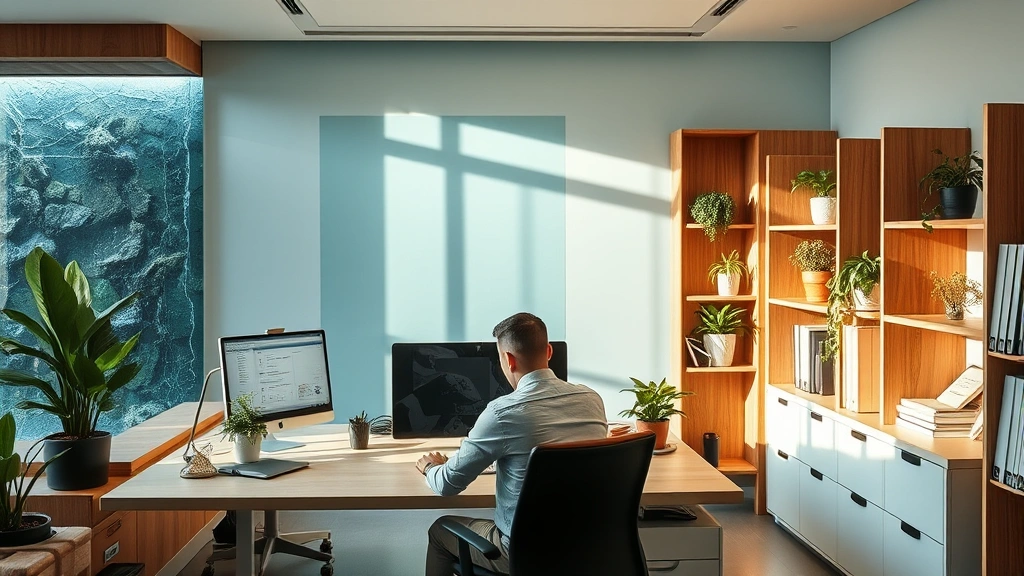
How Environmental Design Affects Concentration
Environmental psychology has identified specific design principles that influence cognitive performance. The concept of “cognitive load” proves particularly relevant—your brain has finite attentional resources, and environmental distractions consume these resources before you even begin focused work.
Studies from the American Psychological Association demonstrate that individuals in cluttered or visually complex environments experience:
- Reduced working memory capacity by up to 20 percent
- Increased error rates in complex tasks
- Elevated stress hormone levels even without conscious awareness
- Faster mental fatigue and reduced work duration before breaks become necessary
- Difficulty transitioning between tasks due to lingering attentional residue
Conversely, calming spaces systematically reduce these cognitive drains. Optimized work environments minimize visual complexity, control sensory input, and create psychological conditions where attention naturally flows toward your primary tasks. This isn’t about sterile minimalism but rather intentional design that supports your specific cognitive objectives.
The physical layout of your space also matters significantly. Research on “prospect and refuge” theory—originally developed in environmental psychology—suggests that spaces offering clear sightlines (prospect) combined with a sense of enclosure or security (refuge) produce the most focused, comfortable work states. This explains why corner desks, alcoves, or spaces with walls behind you often feel more conducive to concentration than completely open environments.
Essential Elements of Calming Spaces
Creating an effective calming space requires attention to multiple interconnected elements. Rather than implementing one dramatic change, research supports a holistic approach addressing sensory, psychological, and ergonomic dimensions simultaneously.
Visual Simplicity and Organization
Your visual field directly impacts cognitive load. Effective calming spaces feature:
- Clear surfaces with minimal visible clutter
- Organized storage systems that remove distracting visual elements
- Consistent color palettes that feel cohesive rather than chaotic
- Intentional negative space that provides visual rest
- Absence of conflicting visual patterns or overly busy textures
When your eyes encounter ordered, simplified visual environments, your brain interprets this as safety and predictability. This reduces the constant low-level scanning your brain performs in complex environments, freeing attentional capacity for meaningful work.
Psychological Safety and Personalization
Paradoxically, while simplicity matters, complete sterility undermines focus. Neuroscience research indicates that personal elements—photographs, meaningful objects, or items reflecting your values—activate brain regions associated with identity and motivation. The key involves balancing personalization with restraint. A few carefully chosen items that genuinely matter to you enhance motivation and emotional connection without creating visual overwhelm.
This personalization signals to your brain that this space belongs to you and supports your wellbeing, further activating parasympathetic responses and reducing defensive scanning behaviors.
Color Psychology and Mental Performance
Color profoundly influences both mood and cognitive function, operating through both neurobiological and cultural-psychological mechanisms. Understanding color’s impact allows strategic implementation in your calming space.
Calming colors for mental health typically include:
- Blues and teals: Lower arousal levels, reduce heart rate and blood pressure, enhance creative thinking
- Greens: Associated with nature and growth, reduce eye strain, promote balance and restoration
- Soft neutrals (warm grays, beiges): Provide visual stability without stimulation
- Muted purples: Support creativity while maintaining calmness
Research from Frontiers in Psychology demonstrates that exposure to blue-green color spectrums triggers measurable decreases in cortisol and increases in alpha brainwave activity. Conversely, bright reds, oranges, and high-saturation yellows activate arousal systems—useful for brief motivational boosts but counterproductive for sustained focus work.
The saturation level matters equally as the hue itself. Soft, muted versions of calming colors prove far more effective than vibrant, saturated versions. A soft sage green promotes tranquility; a bright kelly green overstimulates. This distinction explains why some spaces feel calming despite using “active” colors—the reduced saturation fundamentally changes the neurobiological response.
Sound Management Strategies
Auditory environment dramatically influences focus capacity. Your brain continuously monitors sounds for potential threats or important information, and this monitoring happens largely outside conscious awareness. Unpredictable or variable sounds prove particularly disruptive because they trigger repeated orienting responses.
Optimal Sound Environments for Focus
- Silence or near-silence: Ideal for analytical work, detailed writing, complex problem-solving
- Consistent ambient sound: White noise, brown noise, or nature sounds mask variable sounds and provide acoustic consistency
- Instrumental or lyric-free music: Supports routine tasks and creative thinking without language-processing interference
- Binaural beats: Emerging research suggests specific frequency patterns may enhance focus states
The critical principle involves predictability. Your brain adapts to consistent sounds through a process called habituation, effectively filtering them from conscious attention. Variable or surprising sounds repeatedly trigger attentional capture, fragmenting focus. This explains why busy coffee shops, despite their popularity, actually reduce focus for most people—the unpredictable sound environment demands constant attentional resources.
Implementing sound management might involve noise-canceling headphones, acoustic panels to reduce reverberation, or strategic placement of soft furnishings that absorb sound. The goal centers on controlling variability rather than achieving absolute silence.
Lighting and Circadian Rhythm Optimization
Lighting quality influences both immediate focus capacity and long-term neurological health. Natural light exposure regulates circadian rhythms, which govern sleep-wake cycles, hormone production, and cognitive performance fluctuations throughout the day.
Lighting Principles for Calming Spaces
- Maximize natural light exposure: Position work areas near windows when possible; morning light exposure particularly strengthens circadian rhythm regulation
- Avoid harsh fluorescent lighting: High-frequency flicker and blue-heavy spectrums create subtle stress responses
- Implement warm, dimmable artificial lighting: Color temperature around 3000-4000K provides adequate illumination without overstimulation
- Reduce screen glare: Position monitors perpendicular to windows; use anti-glare filters to minimize eye strain and associated stress responses
- Respect circadian timing: Bright blue-spectrum light in morning and early afternoon supports alertness; warmer tones in evening support melatonin production
Research from the National Sleep Foundation demonstrates that proper lighting significantly improves both daytime focus and nighttime sleep quality. Individuals with optimized light exposure show enhanced cognitive performance, reduced afternoon fatigue, and better emotional regulation. This single environmental factor influences nearly every aspect of mental performance.
Natural Elements and Biophilic Design
Humans evolved in natural environments, and our nervous systems retain deep-seated responses to natural elements. Biophilic design—deliberately incorporating natural elements into built environments—leverages this evolutionary heritage to create calming, focus-enhancing spaces.
Biophilic Elements for Focus Enhancement
- Living plants: Improve air quality, reduce stress hormones, and provide soft visual focal points
- Natural materials: Wood, stone, and natural fibers activate sensory systems associated with safety and groundedness
- Water features: Moving water sounds create consistent acoustic masking while evoking parasympathetic responses
- Natural light and views: Windows with nature views provide periodic mental restoration through “soft fascination”
- Natural color palettes: Earth tones, greens, and blues mimic natural environments
Studies show that even brief views of natural scenes—or high-quality nature photography—restore attention, reduce mental fatigue, and improve subsequent focus capacity. This phenomenon, termed “attention restoration theory,” suggests that natural environments engage attention in gentle, non-demanding ways, allowing directed-attention mechanisms to recover.
The psychological mechanism operates through multiple pathways. Natural elements reduce threat-detection activation in the amygdala, promote parasympathetic tone, and engage brain regions associated with reward and meaning-making. For sustained focus work, incorporating natural elements transforms your space from merely functional to genuinely restorative.
Practical Implementation Guide
Transforming your space into a calming focus environment need not require extensive renovations or significant expense. Strategic, incremental changes prove more sustainable and effective than attempting complete redesign.
Phase One: Assessment and Foundation (Week 1-2)
- Evaluate your current space honestly: What elements distract you? What creates stress? What currently supports focus?
- Declutter systematically, removing items that don’t serve your work or wellbeing
- Organize remaining items into logical systems that minimize visual complexity
- Assess current lighting, sound, and temperature—identify primary sensory stressors
Phase Two: Core Modifications (Week 3-4)
- Implement primary calming color—paint an accent wall or use removable wallpaper if renting
- Upgrade lighting to warm, dimmable options; maximize natural light access
- Address sound environment through headphones, white noise, or acoustic materials
- Add one or two natural elements—a plant, natural wood furniture, or nature artwork
Phase Three: Refinement and Personalization (Week 5+)
- Introduce meaningful personal items thoughtfully—avoid visual clutter
- Experiment with organizational systems until workflow feels effortless
- Fine-tune temperature, humidity, and air quality
- Establish routines that maintain your space’s calming qualities
For those seeking deeper engagement with mental health and wellbeing principles, consider how your physical environment reflects and supports your broader wellness goals. Your calming space becomes a tangible expression of your commitment to sustainable, healthy productivity.
Budget-Conscious Strategies
- Utilize natural light fully before purchasing artificial lighting
- Acquire plants from propagations or budget nurseries
- Implement color changes through removable options rather than permanent paint
- Use DIY acoustic solutions with soft furnishings you already own
- Source meaningful personal items from nature walks or meaningful collections
Even minimal investments create meaningful impact. The research emphasizes that intentionality matters more than expense—thoughtfully arranged simple elements outperform expensive chaotic designs.
Frequently Asked Questions
How long does it take for a calming space to improve focus?
Most individuals notice improved focus capacity within 3-5 days of environmental changes, though neurobiological optimization continues for 2-3 weeks as your nervous system fully adapts. Consistent use maximizes benefits—your brain learns to associate the space with focused work states, creating conditioned responses that strengthen over time.
Can I create a calming space in a shared office?
Yes, though with constraints. Personalize your immediate workspace through desktop plants, desk organizers, and personal items. Use noise-canceling headphones to manage sound. Implement lighting modifications at your desk through adjustable task lamps. Request proximity to windows if possible. These localized changes create a personal calming zone within larger environments.
What’s the relationship between calming spaces and mental health?
Taking breaks and protecting mental health involves creating environments that support wellbeing. Calming spaces reduce chronic stress activation, lower anxiety levels, and provide psychological safety—all protective factors for mental health. They complement rather than replace professional mental health support but significantly contribute to overall psychological resilience.
Does minimalism work for everyone?
Minimalism as strict aesthetic works for some but not all. The underlying principle—reducing unnecessary cognitive load—applies universally. However, optimal implementation varies. Some people thrive with sparse environments; others need more visual stimulation and warmth. Personalization matters. The goal involves finding your balance point where the environment supports focus without feeling cold or depersonalized.
How do I maintain a calming space over time?
Establish simple maintenance routines: weekly tidying (15 minutes), monthly deep organization, and quarterly reassessment of what’s working. Treat space maintenance as investment in your productivity and wellbeing rather than chore. Many find that protecting their environment’s calm actually becomes energizing as they experience improved focus benefits.
Can calming spaces improve sleep and recovery?
Absolutely. The same principles supporting focus—reduced sensory stimulation, parasympathetic activation, natural light exposure—also support sleep quality. Many people intentionally extend calming design principles into bedrooms, creating spaces optimized for both work focus and restorative rest. This integrated approach maximizes the health benefits of environmental design.
What role does temperature play in focus?
Temperature significantly influences cognitive performance and comfort. Most research indicates 68-72°F (20-22°C) optimizes focus for most people, though individual preferences vary. Importantly, temperature consistency matters more than specific degree—fluctuations demand attentional resources as your body works to regulate. Ensure your space maintains stable, comfortable temperature throughout work sessions.
For additional perspective on books exploring mental health and environmental wellbeing, consider exploring literature on environmental psychology and neuroscience of space design. These resources provide deeper theoretical understanding supporting practical implementation.
Conclusion
Calming spaces boost focus through multiple interconnected neurobiological and psychological mechanisms. By thoughtfully addressing visual complexity, sound environment, lighting, color, and natural elements, you create conditions where your brain naturally allocates resources toward deep work rather than threat-monitoring. This isn’t luxury or indulgence but rather evidence-based investment in your cognitive performance, mental health, and sustainable productivity. Start with one or two changes, observe the impact, and gradually build your personalized calming environment. Your future focused self will thank you for this present investment.


