
Campbell Biology: Key Focus Concepts Explained
Campbell Biology stands as one of the most comprehensive and widely-adopted biology textbooks in educational institutions worldwide. Whether you’re a student preparing for exams or an educator seeking to understand core biological principles, mastering the key concepts from this seminal work requires focused attention and strategic learning. The textbook’s emphasis on scientific thinking and evidence-based understanding makes it essential for anyone pursuing serious study in life sciences.
The challenge many students face isn’t the complexity of biology itself, but rather maintaining the focus needed to absorb dense material. Campbell Biology covers an enormous range of topics, from molecular biology to ecology, requiring sustained concentration and effective study strategies. This guide breaks down the essential concepts you need to understand, while providing insights into how proper mental focus enhances learning retention.
Understanding the Unity and Diversity of Life
Campbell Biology emphasizes a fundamental principle: all living organisms share common ancestry and basic molecular mechanisms, yet display remarkable diversity. This concept serves as the unifying thread throughout the entire textbook. Understanding this duality requires focused attention to how evolution explains both the similarities and differences across all life forms.
The unity of life manifests in several critical ways. All organisms use DNA as their genetic material, employ the same basic genetic code, and rely on ATP for cellular energy. These universal characteristics suggest a common origin for all life on Earth. Simultaneously, the diversity of life—encompassing millions of species adapted to virtually every environment—demonstrates evolution’s creative power. Maintaining concentration on this paradox helps students appreciate biology’s elegance.
When studying this section, consider how mental clarity and focus support deeper understanding of abstract concepts. The ability to hold multiple perspectives simultaneously—recognizing both unity and diversity—requires cognitive resources that diminish when attention wavers. Implementing focused study sessions with minimal distractions enhances comprehension of these foundational principles.
Molecular Biology and Genetics
This section represents the molecular foundation of Campbell Biology, exploring how genetic information flows through living systems. The central dogma—DNA to RNA to protein—forms the conceptual backbone of modern biology. Understanding this information cascade requires sustained focus on biochemical processes that often seem abstract to students.
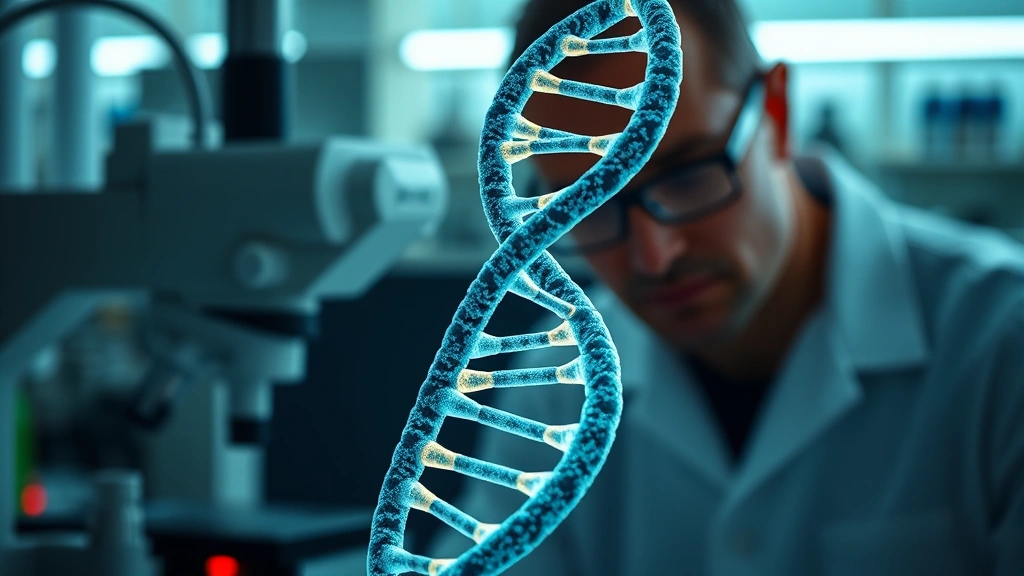
DNA structure and replication represent the first critical concept. The double helix configuration allows for accurate copying through base pairing rules. Students must grasp not only the structure but also the biological implications: how faithful replication ensures genetic continuity while occasional mutations drive evolution. This connection between molecular mechanism and evolutionary consequence requires integrative thinking.
Gene expression follows DNA replication in the conceptual hierarchy. Transcription converts DNA information into messenger RNA, while translation converts RNA into proteins. Each step involves multiple enzymes, regulatory proteins, and energy expenditure. The complexity can overwhelm students lacking adequate focus, making it essential to break the process into manageable components during study sessions.
Mendelian genetics and population genetics extend molecular concepts to organismal and population levels. Understanding how alleles segregate during reproduction, how dominant and recessive traits manifest, and how studying biological principles supports cognitive development all require concentrated attention. The mathematical aspects of population genetics demand particular focus, as probability calculations can challenge students with divided attention.
Modern molecular techniques—including DNA sequencing, PCR, and genetic engineering—represent contemporary applications of molecular biology principles. These technologies have transformed medicine, agriculture, and forensics. Understanding both the theoretical basis and practical applications requires holding multiple levels of complexity in working memory simultaneously.
Cell Structure and Function
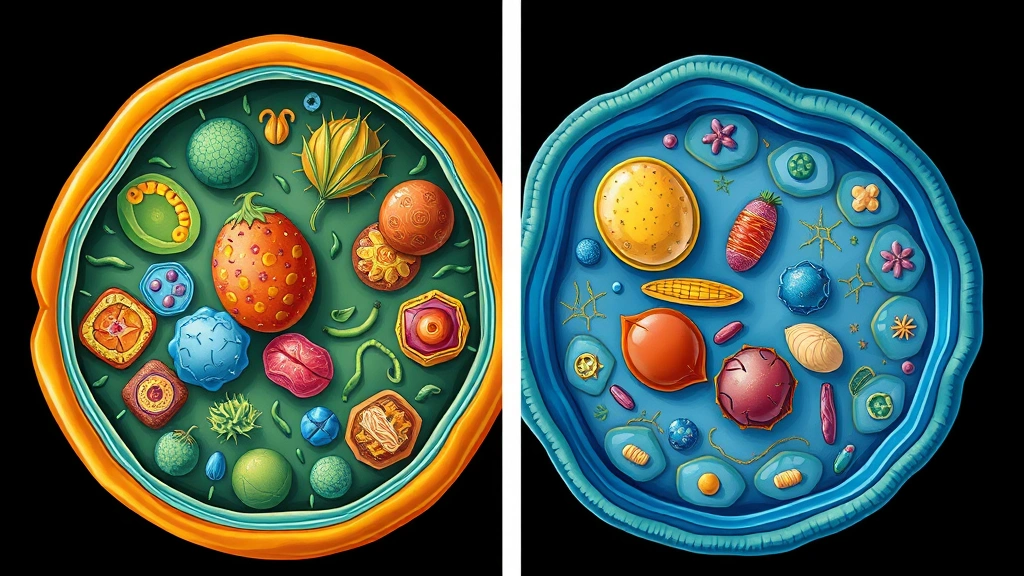
The cell represents the fundamental unit of life, and Campbell Biology dedicates substantial coverage to cellular organization and function. Two primary cell types—prokaryotic and eukaryotic—display fundamentally different architectures reflecting their evolutionary history.
Prokaryotic cells, exemplified by bacteria and archaea, lack membrane-bound organelles. Their simplicity belies their metabolic sophistication and evolutionary success. Understanding prokaryotic structure requires appreciating how cells accomplish complex functions without compartmentalization. The plasma membrane, ribosomes, and nucleoid region constitute the essential components.
Eukaryotic cells exhibit remarkable complexity, with numerous membrane-bound organelles performing specialized functions. The nucleus houses genetic material and controls gene expression. Mitochondria generate ATP through oxidative phosphorylation. The endoplasmic reticulum and Golgi apparatus orchestrate protein synthesis and modification. Lysosomes digest cellular waste. Chloroplasts in plant cells capture light energy. Each organelle represents a specialized compartment requiring focused study to understand its unique structure-function relationships.
Cell membranes deserve particular attention as the critical interface between cells and their environment. The fluid mosaic model describes how phospholipids and proteins arrange dynamically within the membrane. Transport mechanisms—including passive diffusion, facilitated diffusion, and active transport—allow cells to maintain internal conditions despite external changes. Understanding these processes requires concentration on how molecular properties determine cellular behavior.
The cell cycle, mitosis, and meiosis represent crucial processes for cellular reproduction and genetic diversity. Mitosis produces two identical daughter cells, maintaining chromosome number. Meiosis produces four genetically unique gametes with half the chromosome number. The precise choreography of these processes, involving checkpoint controls and regulatory proteins, demands sustained attention to follow the sequential stages.
Evolution and Natural Selection
Evolution represents the overarching principle unifying all biological sciences. Campbell Biology presents evolution not as theory but as the foundation explaining life’s diversity and the connections among all organisms. Darwin’s theory of natural selection provides the primary mechanism driving evolutionary change.
Natural selection operates when organisms with advantageous traits survive and reproduce more successfully than competitors, passing those traits to offspring. Over countless generations, populations accumulate beneficial adaptations. Understanding natural selection requires grasping several interconnected concepts: variation within populations, heredity of traits, differential reproductive success, and the resulting change in allele frequencies. These concepts interact in ways requiring integrated thinking.
Evidence for evolution comes from multiple independent sources. Fossil records document evolutionary transitions. Comparative anatomy reveals homologous structures suggesting common ancestry. Molecular biology demonstrates genetic similarities among distantly related organisms. Biogeography shows how species distribution reflects evolutionary history. Observing natural selection in real-time through laboratory experiments and field studies provides direct evidence. Integrating these diverse evidence streams requires focused attention to recognize their unified support for evolutionary theory.
Speciation—the process by which new species arise—represents evolution at its most dramatic scale. Reproductive isolation, whether geographic, behavioral, or genetic, prevents gene flow between diverging populations, allowing them to accumulate differences until they become separate species. Understanding speciation mechanisms requires following complex population-level processes over evolutionary timescales.
Phylogenetics and cladistics provide frameworks for reconstructing evolutionary relationships among organisms. Cladograms depict evolutionary trees, showing common ancestors and descent patterns. Reading and interpreting these diagrams requires careful attention to branching patterns and the principle that organisms sharing more recent common ancestors are more closely related. As you deepen your understanding of evolutionary concepts, consider how building consistent study habits supports mastery of complex material.
Ecology and Organism Interactions
Ecology examines how organisms interact with each other and their physical environment. Campbell Biology approaches ecology from multiple scales: individual organisms, populations, communities, and entire ecosystems. Each scale involves distinct concepts and principles requiring focused study.
Population ecology explores how populations grow, stabilize, or decline. The exponential growth model describes unrestricted population increase, while the logistic growth model incorporates carrying capacity—the maximum population size an environment can sustain. Understanding factors limiting population growth requires analyzing resource availability, predation, disease, and competition. These concepts connect to real-world issues including human population growth and conservation biology.
Community ecology examines interactions among different species sharing an environment. Competition for resources, predation, parasitism, mutualism, and commensalism represent key interaction types. Food webs depict energy flow through communities, showing how energy from sunlight captures through photosynthesis, transfers through trophic levels, and dissipates as heat. Understanding energy flow requires calculating efficiency of energy transfer between levels and recognizing why ecosystems support fewer top predators than herbivores.
Ecosystem ecology integrates communities with their physical environment, examining nutrient cycling and energy flow at the largest scale. Biogeochemical cycles—including carbon, nitrogen, phosphorus, and water cycles—show how elements cycle between organisms and abiotic reservoirs. Human activities increasingly influence these cycles, creating environmental challenges. Understanding ecosystem principles requires integrating chemical, biological, and physical processes.
Biomes represent large-scale ecological divisions characterized by distinctive climates, vegetation, and animal communities. Tropical rainforests, temperate forests, grasslands, deserts, and tundra each display unique characteristics reflecting adaptation to prevailing conditions. Studying biomes requires maintaining focus on how climate determines vegetation, which determines fauna, creating integrated ecological systems.
Physiology and Homeostasis
Physiology examines how organisms function, from cellular processes to whole-organism systems. Homeostasis—maintaining stable internal conditions despite external changes—represents a unifying principle across all physiological systems. Understanding how organisms regulate temperature, pH, water balance, and nutrient levels requires focused attention to feedback mechanisms.
Animal physiology encompasses multiple integrated systems. The nervous system processes information and coordinates responses through neurons and neurotransmitters. The endocrine system regulates long-term processes through hormones. The circulatory system transports oxygen, nutrients, and waste products. The respiratory system exchanges gases with the environment. The digestive system breaks down food and absorbs nutrients. The excretory system eliminates metabolic wastes. The immune system defends against pathogens. Each system operates both independently and in coordination with others, creating complex interactions requiring integrated understanding.
Plant physiology similarly involves multiple interconnected systems. Roots absorb water and minerals, transporting them upward through xylem tissue. Leaves photosynthesize, converting light energy into chemical energy stored in glucose. Phloem transports sugars and other organic compounds throughout the plant. Hormones regulate growth, development, and responses to environmental stimuli. Understanding plant physiology requires appreciating how sessile organisms have evolved sophisticated mechanisms for sensing and responding to their environment.
Maintaining focus while studying physiology proves particularly challenging due to the intricate connections among systems. Creating visual representations—including labeled diagrams and flow charts—can enhance comprehension. Breaking complex systems into component parts, then reassembling them into integrated wholes, supports learning retention. Recognizing how maintaining mental wellness supports academic focus can motivate students to implement self-care practices that enhance study effectiveness.
FAQ
What is the primary focus of Campbell Biology?
Campbell Biology emphasizes evolution as the unifying principle of all life sciences. The textbook explores how evolution explains both the unity of life (shared molecular mechanisms and common ancestry) and its diversity (millions of species adapted to varied environments). Every concept, from molecular biology to ecology, connects back to evolutionary principles.
How can I maintain focus while studying dense Campbell Biology material?
Implement focused study sessions of 25-50 minutes with minimal distractions. Break complex topics into manageable components. Create visual representations including diagrams and concept maps. Review material regularly rather than cramming. Connect new concepts to previously learned material. Engage with the material actively through practice problems and teaching concepts to others. Consider how implementing strategies from mental health resources can support sustained academic focus.
Which Campbell Biology concepts are most important for foundational understanding?
The central dogma (DNA to RNA to protein), natural selection, cell structure and function, and homeostasis represent foundational concepts. These principles appear throughout the textbook and provide the basis for understanding more specialized topics. Mastering these core concepts creates a framework for integrating additional material.
How do molecular and organismal biology concepts connect?
Molecular processes at the cellular level scale up to produce observable traits in organisms. Gene expression determines protein production, which affects cellular function, which influences tissue function, which determines organ system performance, ultimately shaping organism behavior and survival. Understanding these connections requires integrative thinking across biological scales.
What role does Campbell Biology play in modern scientific research?
Campbell Biology provides the conceptual foundation underlying modern biological research. Whether studying disease mechanisms, developing new medicines, engineering crops, or conserving endangered species, researchers rely on principles presented in Campbell Biology. The textbook represents the current scientific consensus on life’s fundamental principles.
How can I connect Campbell Biology concepts to real-world applications?
Seek connections between textbook concepts and current events, medical advances, environmental issues, and agricultural innovations. Understand how genetic engineering, vaccine development, climate change ecology, and conservation biology all apply Campbell Biology principles. These connections enhance engagement and demonstrate biology’s relevance to pressing global challenges.


