
What is a Coarse Focus Knob? Expert Insights into Microscopy’s Essential Tool
The coarse focus knob represents one of the most fundamental components in microscopy, yet many users overlook its critical importance in achieving optimal specimen observation. Whether you’re a student examining biological samples or a professional conducting detailed research, understanding how to properly use and maintain your coarse focus knob directly impacts your ability to capture clear, detailed images. This essential mechanism serves as your first line of adjustment when bringing specimens into view, making it the gateway to successful microscopic analysis.
In modern laboratory settings, the coarse focus knob works in tandem with fine focus mechanisms to deliver precise optical control. The distinction between coarse and fine focus adjustments represents a fundamental principle in microscope design—allowing users to quickly approximate focus before making minute adjustments. This two-stage approach has remained standard across microscopy for decades because it balances speed with accuracy, a principle that extends to many aspects of focus and concentration practices in professional environments.
Understanding Coarse Focus Knob Mechanics
The coarse focus knob operates through a mechanical system that moves the microscope stage or objective lens vertically. This movement typically ranges from several millimeters to centimeters, enabling rapid adjustment across a wide focal range. The knob connects to a threaded screw mechanism that converts rotational motion into linear vertical displacement. This straightforward mechanical principle has proven reliable across countless laboratory applications, from educational institutions to cutting-edge research facilities.
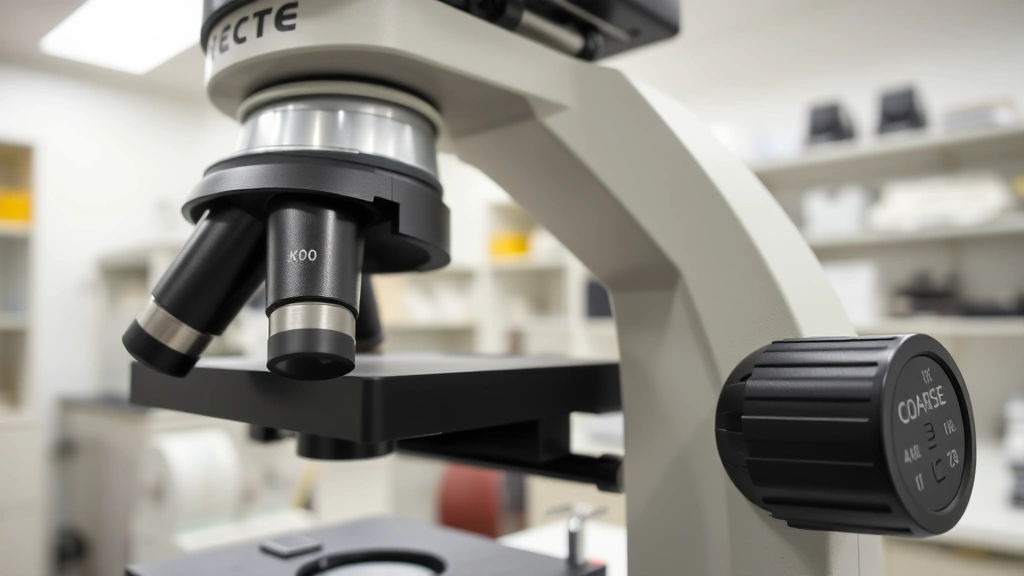
Most modern microscopes feature a dual-knob system mounted on the right side of the microscope body. The larger knob—your coarse focus adjustment—provides the mechanical advantage needed for quick, substantial movements. The gear ratio in coarse focus mechanisms typically ranges from 10:1 to 20:1, meaning one complete rotation of the knob moves the stage approximately 2-4 millimeters. This ratio allows users to traverse the entire focal depth of a specimen in seconds, making it invaluable when screening multiple fields of view or switching between different magnifications.
The construction materials matter significantly for durability and precision. High-quality coarse focus knobs utilize brass or stainless steel components that resist corrosion and maintain consistent mechanical properties over years of use. The knob’s grip surface, typically textured rubber or plastic, provides ergonomic control even during extended microscopy sessions. Understanding these mechanical fundamentals helps users appreciate why proper handling techniques protect both the equipment and the quality of observations.
How Coarse Focus Differs from Fine Focus
The distinction between coarse and fine focus represents a critical concept in microscopy education and practice. While the coarse focus knob enables large-scale vertical movement for initial specimen positioning, the fine focus knob (typically the smaller, finer-threaded knob) allows micro-adjustments measured in micrometers. This dual-mechanism approach reflects sound engineering principles that prioritize both efficiency and precision.
Coarse focus adjustments generally move the stage 0.5-2 millimeters per complete rotation, depending on the microscope model and design specifications. Fine focus mechanisms, by contrast, move the stage only 0.1-0.2 millimeters per rotation, providing the sensitivity needed to locate the precise focal plane. This hierarchical approach mirrors principles discussed in building systematic habits for consistent performance—starting broad and progressively refining.
The magnification level you’re using directly influences how effectively each focus mechanism performs. At lower magnifications (4x or 10x objectives), the coarse focus knob provides sufficient precision for most observations. As magnification increases (40x, 100x, or higher), the depth of field narrows significantly, making fine focus adjustments essential for maintaining clarity. Professional microscopists develop an intuitive sense of when to transition from coarse to fine adjustments, a skill that develops through deliberate practice and experience.
Proper Technique for Using Coarse Focus
Mastering proper coarse focus technique protects your equipment and ensures optimal image quality. The fundamental rule involves always focusing upward from below the specimen—never focusing downward directly toward the slide. This preventive approach avoids the common catastrophe of driving the objective lens directly into the specimen, which can shatter both the lens and the slide.
Begin by positioning your specimen on the stage and setting the lowest magnification objective (typically 4x). Looking through the eyepieces, use the coarse focus knob to move the stage downward until the objective lens is as far as possible from the specimen. Then, while observing through the eyepieces, slowly rotate the coarse focus knob to raise the stage. You’ll observe the specimen gradually come into view. Once you achieve approximate focus, switch to the fine focus knob for precise adjustment. This methodical approach, which emphasizes deliberate practice and attention to detail, prevents damage and builds proper habits.
Hand position matters more than many users realize. Position your hand on the coarse focus knob with your fingers wrapped naturally around it, applying gentle, consistent pressure. Avoid sudden jerky movements or excessive force—the mechanism requires only light resistance to operate smoothly. Many experienced microscopists use a single-handed technique, leaving their other hand free to adjust the stage position or manipulate specimens. This efficiency reflects the broader principle of optimizing physical and mental workflows for sustained performance.
When transitioning between different magnifications, always return to the lowest magnification before changing objectives. This practice prevents accidental collisions between the objective lens and your specimen. After changing to a higher magnification objective, use the coarse focus knob to bring the specimen approximately into view before switching to fine focus. This systematic approach, repeated hundreds of times, becomes automatic and protects your valuable equipment.
Common Mistakes and How to Avoid Them
Even experienced users occasionally fall into problematic patterns with coarse focus adjustment. One widespread mistake involves focusing downward directly toward the specimen without first positioning the objective lens below the focal plane. This careless approach has damaged countless microscopes and represents the leading cause of objective lens replacement in educational settings. The solution requires establishing a mental checklist: position lens below specimen, then focus upward.
Another frequent error involves applying excessive force to the coarse focus knob. Some users, particularly those unfamiliar with microscope mechanics, assume that harder pressure yields better results. In reality, the mechanism operates smoothly with minimal force. Excessive pressure can damage the internal threading, strip gears, and create mechanical play that compromises focus precision. Treating the coarse focus knob with gentle respect—much like the mindful attention discussed in professional approaches to cognitive performance—ensures longevity and reliability.
Users often fail to recognize when they’ve reached the mechanical limits of focus adjustment. Continuing to rotate the coarse focus knob beyond these limits can damage internal components. Modern microscopes typically include mechanical stops that prevent over-rotation, but older models may lack this safety feature. Learning to recognize the subtle resistance that indicates you’ve reached the adjustment limits protects the equipment and prevents frustration during critical observations.
Neglecting to use the fine focus knob after achieving approximate focus with the coarse adjustment represents another common mistake. Many students and casual users settle for the clarity achieved with coarse focus alone, missing the dramatically improved image quality available through fine focus refinement. Taking the extra seconds to optimize focus using both mechanisms yields substantially better observations and photographs.

Maintenance and Care Guidelines
Protecting your microscope’s coarse focus mechanism requires understanding its mechanical vulnerabilities. Dust and debris accumulation represents the primary threat to smooth operation. Regular cleaning of the knob’s exterior surface and the surrounding area prevents particles from entering the mechanical system. Use a soft, dry cloth for routine cleaning, avoiding solvents or excessive moisture that could damage internal components.
The mechanical linkage connecting the coarse focus knob to the stage requires periodic inspection. Check for visible signs of wear, grinding sounds during adjustment, or unusual resistance. These warning signs indicate that professional servicing may be necessary. Many institutions employ trained microscope technicians who understand the specific maintenance requirements for different microscope models. Proactive maintenance prevents catastrophic failures that interrupt research and education.
Storage conditions significantly impact long-term functionality. Keep microscopes in clean, dry environments with moderate temperature stability. Extreme temperature fluctuations can cause metal components to expand and contract, creating mechanical play and reducing focus precision. Humidity poses particular risks, as moisture can corrode metal components and promote fungal growth on optical surfaces. Proper environmental management for sustained performance extends to laboratory equipment as well as personal wellbeing.
When storing microscopes for extended periods, ensure the stage is positioned at an intermediate height—neither fully raised nor fully lowered. This neutral position minimizes stress on internal springs and mechanical components. Cover the microscope with a dust cover to prevent accumulation of particles. If your facility uses microscopes infrequently, operate the coarse focus mechanism through its full range of motion monthly to maintain lubrication distribution and prevent mechanical stiffness.
Advanced Applications in Research
Professional researchers leverage the coarse focus knob strategically within sophisticated observation protocols. In neuroscience research examining neural tissue structures, precise focus control enables detailed examination of synaptic connections and cellular morphology. The ability to rapidly transition between overview and detailed observations—using coarse focus for navigation and fine focus for precision—streamlines research efficiency.
In clinical pathology, microbiological specimen analysis requires systematic scanning across multiple fields of view. The coarse focus mechanism allows pathologists to efficiently survey specimens while maintaining the fine focus adjustments needed to identify diagnostic features. Developing this rhythm of coarse positioning followed by fine adjustment becomes second nature through years of professional practice.
Advanced confocal microscopy and fluorescence techniques demand exceptional focus control. While automated focus systems handle some aspects, manual coarse focus adjustment remains essential for initial positioning and troubleshooting. Understanding the mechanical principles underlying the coarse focus knob helps researchers optimize their techniques and troubleshoot problems that automated systems cannot resolve.
Educational research examining optimal microscopy instruction has revealed that students who develop strong manual focus skills—beginning with proper coarse focus technique—demonstrate superior performance in advanced microscopy courses. This finding aligns with broader psychological research on deliberate practice and skill development, confirming that foundational technique matters profoundly for long-term competence.
FAQ
What is the ideal speed for rotating the coarse focus knob?
Rotate the coarse focus knob at a moderate pace—neither rushed nor excessively slow. A complete rotation should take approximately 2-3 seconds, allowing you to observe the specimen gradually coming into focus. This pace provides adequate control while maintaining reasonable efficiency during observation sessions.
Can I use only the coarse focus knob without fine focus adjustment?
While technically possible at lower magnifications, relying solely on coarse focus sacrifices image quality significantly. Even at 10x magnification, the fine focus knob reveals details invisible at coarse focus resolution. Professional practice consistently employs both mechanisms in sequence for optimal results.
Why does my coarse focus knob feel stiff or grinding?
Stiffness or grinding sensations indicate mechanical problems requiring professional attention. Potential causes include dust accumulation, internal corrosion, worn components, or misalignment. Continuing to force the knob can worsen damage, so cease use and contact a microscope technician immediately.
How often should coarse focus mechanisms be professionally serviced?
Annual professional inspection is recommended for frequently-used microscopes in institutional settings. Occasionally-used equipment may require servicing every 2-3 years. Any changes in feel, resistance, or performance warrant immediate professional evaluation regardless of the standard schedule.
What is the relationship between magnification and coarse focus sensitivity?
As magnification increases, the depth of field narrows dramatically. At 4x magnification, coarse focus adjustments provide adequate precision. By 40x magnification, the narrow depth of field makes fine focus essential. At 100x magnification with oil immersion, even minute coarse focus movements significantly alter the focal plane, requiring exceptional control.


