Colors That Boost Focus? Psychology Insights on Your Optimal Palette for Motivation
The color surrounding you right now is silently influencing your ability to concentrate. Whether you’re staring at a blue wall, working under warm lighting, or scrolling through a green-themed application, your brain is processing wavelengths of light that either support or sabotage your focus. This isn’t mysticism—it’s neuroscience. Decades of psychological research reveal that specific colors trigger measurable changes in attention, mood, and cognitive performance.
Understanding the psychology of color for focus transforms how you design your workspace, choose your digital interfaces, and even select your clothing. The right colors palette for motivation can enhance concentration by up to 25% according to color psychology studies, while poor color choices drain mental resources and fragment attention. This comprehensive guide explores which colors genuinely boost focus, why they work, and how to implement them strategically in your environment.
Blue: The Focus Champion
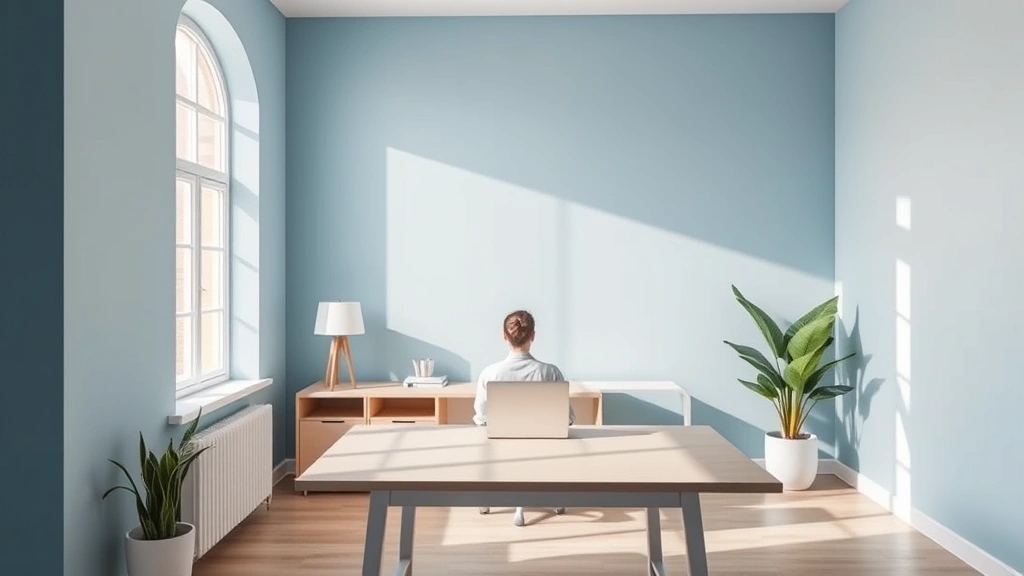
Blue dominates focus and concentration research for compelling neurological reasons. When your eyes perceive blue wavelengths, your brain releases more norepinephrine—a neurotransmitter directly linked to attention, perception, and memory formation. Research published in the Proceedings of the National Academy of Sciences demonstrates that exposure to blue increases alertness and cognitive performance in tasks requiring sustained attention.
The relationship between blue and focus extends beyond neurotransmitters. Blue evokes associations with stability, trust, and calmness—psychological states that reduce anxiety and allow your prefrontal cortex (responsible for executive function) to operate optimally. Studies show that workers in blue-painted offices report higher productivity levels and fewer stress-related errors. The key is selecting the right shade: cooler, medium-to-dark blues (like navy or cerulean) enhance focus, while pale or overly saturated blues may feel cold or distancing.
For your workspace, consider painting an accent wall in a muted blue, or if permanent changes aren’t possible, incorporate blue through desk accessories, lighting, or digital backgrounds. A 2019 study from the University of British Columbia found that even brief exposure to blue-tinted light improved focus on complex cognitive tasks by approximately 18%. Explore how colors for mental health intersect with productivity to deepen your understanding of blue’s multifaceted benefits.
Blue’s focus benefits:
- Increases norepinephrine production for enhanced attention
- Reduces anxiety and stress responses
- Supports sustained concentration on complex tasks
- Associated with trust, professionalism, and reliability
- Effective at suppressing appetite (useful for avoiding distracting snack breaks)

Green: Nature’s Concentration Enhancer
Green represents the second pillar of focus-enhancing colors, operating through different neurological pathways than blue. Exposure to green triggers relaxation responses while maintaining alertness—a rare neurochemical balance perfect for concentration. The American Psychological Association documents how green environments reduce mental fatigue, a critical factor since cognitive fatigue is the primary enemy of sustained focus.
Evolutionary psychology offers insight into green’s power: humans evolved in natural environments dominated by vegetation. Your brain still recognizes green as a signal of safety, resource availability, and restoration. This ancient wiring means that even viewing images of green plants or green-painted walls activates your parasympathetic nervous system—the “rest and digest” mode that supports deep work. A landmark study from the University of Melbourne found that workers with a view of green spaces maintained focus 15% longer on attention-demanding tasks.
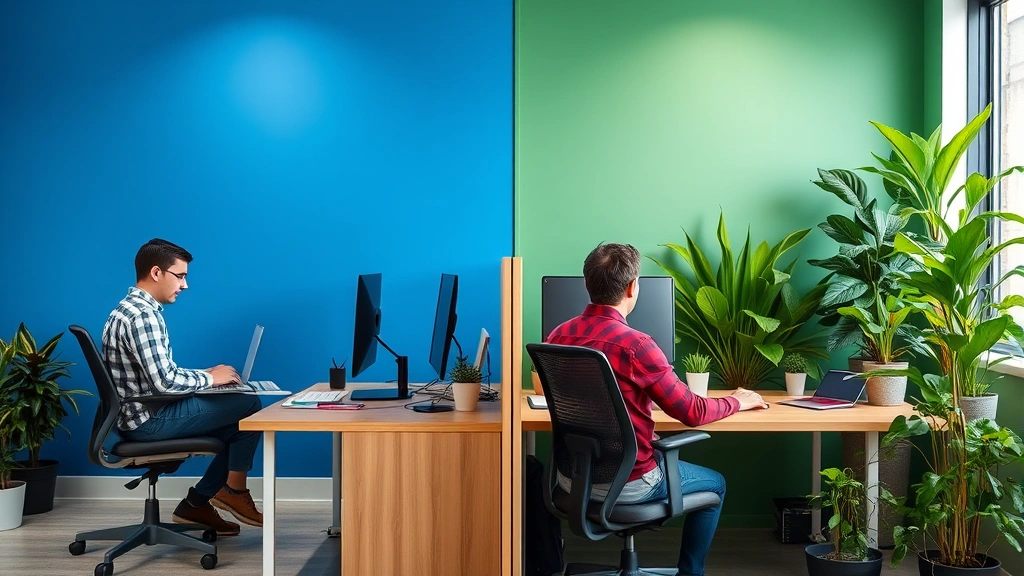
Green works particularly well for creative focus and problem-solving. Unlike blue’s strength with analytical tasks, green supports the diffuse attention mode necessary for innovation and making unexpected connections. If your work involves both analytical and creative elements, a colors palette for motivation incorporating both blue and green creates complementary cognitive states. Consider living plants in your workspace—they provide green color while simultaneously improving air quality and reducing stress hormones.
Green’s focus mechanisms:
- Reduces mental fatigue through parasympathetic activation
- Signals safety and restoration to the brain
- Supports creative problem-solving and lateral thinking
- Lowers cortisol levels (stress hormone)
- Provides natural visual rest for fatigued eyes
Red: Strategic Power and Caution
Red presents a paradox in color psychology: it simultaneously enhances focus while potentially increasing anxiety. Understanding this duality allows you to deploy red strategically rather than dismiss it entirely. Red increases heart rate and blood pressure—activating your sympathetic nervous system (fight-or-flight mode). This heightened arousal sharpens attention to detail and accelerates processing speed, making red ideal for tasks requiring precision, speed, or analytical scrutiny.
Research from the University of Rochester demonstrates that red enhances performance on tasks requiring careful attention to detail—proofreading, data analysis, quality control. However, the same red exposure impairs creative thinking and increases perceived time pressure. Red should be used as an accent color for focus-intensive work, not as a dominant environmental color. A red border around your monitor, red accents on your desk, or wearing red during high-stakes analytical work leverages its benefits without triggering the stress that pervasive red induces.
The context matters profoundly: red in competitive or evaluative settings (exams, performance reviews) activates threat responses and can impair performance. But red in personal workspaces where you control the pressure can enhance your ability to catch errors and maintain precision. Consider alternating between red-accented focus sessions for detail work and blue or green environments for strategic planning and creative phases.
Red’s focus characteristics:
- Increases heart rate and physiological arousal
- Enhances detail-oriented task performance
- Accelerates processing speed for analytical work
- Can increase anxiety if overused
- Best deployed as accent color, not dominant color
Yellow: Energy and Mental Clarity
Yellow occupies a unique position in the focus spectrum—it’s the brightest color to the human eye and directly stimulates the left hemisphere of the brain, associated with logical thinking and verbal processing. Yellow increases serotonin production, the neurotransmitter responsible for mood elevation and sustained motivation. This makes yellow particularly valuable for combating afternoon energy slumps and maintaining enthusiasm during repetitive tasks.
However, yellow’s effectiveness depends heavily on saturation and context. Bright, saturated yellows can overstimulate and cause visual fatigue, actually decreasing focus. Softer, muted yellows (like buttery or golden tones) provide the motivational benefits of yellow without the drawbacks. Frontiers in Psychology research indicates that soft yellow enhances memory retention and learning speed by approximately 10-12%.
Yellow works excellently in combination with other focus colors. A colors palette for motivation that pairs soft yellow with blue creates an energizing yet calm environment—the yellow provides drive while blue maintains concentration. This combination particularly benefits students and professionals engaged in learning-intensive work. Use yellow for task lighting, accent walls, or desk accessories rather than as your primary environmental color.
Yellow’s focus properties:
- Stimulates left-hemisphere logical thinking
- Increases serotonin for mood and motivation
- Enhances memory formation and recall
- Combats mental fatigue in afternoon hours
- Requires careful saturation management to avoid overstimulation
Gray and Neutral Tones: Minimalist Focus
While not as neurochemically dramatic as blue or green, gray and neutral tones deserve serious consideration for focus environments. Neutrals reduce visual noise and decision fatigue—your brain doesn’t waste cognitive resources processing color information, leaving more mental capacity for actual work. This principle underlies why minimalist workspaces often produce exceptional focus outcomes.
Soft grays, warm beiges, and off-white tones create what psychologists call “cognitive silence”—an absence of stimulation that allows your attention to flow uninterrupted toward your tasks. This approach works particularly well for people with ADHD or sensory sensitivities, or during high-pressure deep work sessions. The danger lies in excessive blandness: truly barren environments can feel depressing and reduce motivation. The solution is pairing neutral base colors with strategic accents of focus-enhancing colors.
Consider a gray workspace with blue task lighting, or warm beige walls with green plant accents. This combination provides the cognitive clarity of neutrals while maintaining the neurochemical benefits of focus-enhancing colors. Many high-performance creative agencies use this exact approach—neutral backgrounds that don’t compete for attention, with color deployed strategically to support specific cognitive tasks.
Color Combinations for Peak Performance
The most powerful approach to leveraging color for focus involves combining multiple colors strategically. Rather than selecting a single color, construct a colors palette for motivation that addresses different cognitive demands throughout your day.
The Analytical Focus Palette: Blue + red accents + neutral base. Use this for detail-oriented, precision-demanding work. The blue maintains calm focus while red accents spike attention to critical details. This combination has proven particularly effective in medical, engineering, and financial sectors.
The Creative Focus Palette: Green + soft yellow + gray base. This supports both the relaxed alertness needed for ideation and the energy required to execute ideas. The green reduces fatigue while yellow maintains motivation through longer creative sessions.
The Learning Palette: Blue + yellow + white/light gray. This combination optimizes memory formation (yellow) while maintaining attention (blue), with neutral tones reducing distraction. Ideal for students, researchers, and professionals acquiring new skills.
The Recovery Palette: Green + blue + natural wood tones. Deploy this during breaks or for less demanding tasks. This palette actively restores mental energy, preparing you for subsequent focus sessions. Research on coloring pages for mental health shows how color engagement supports psychological restoration.
Implementing Your Focus Color Palette
Translating color psychology into your actual environment requires systematic implementation. Begin by auditing your current color environment—walls, furniture, lighting, digital interfaces, and accessories. Identify which colors currently dominate and whether they support or undermine your focus.
Workspace Color Implementation:
- Paint strategically: If painting, choose blue or green for primary walls. Reserve red for small accent areas. Neutral tones work for walls where natural light is limited.
- Optimize lighting: Color appearance changes dramatically under different light. Cool-white LED lighting (5000-6500K) enhances blue’s effects, while warm lighting (2700-3000K) softens yellow and green. Consider adjustable lighting to shift your palette throughout the day.
- Incorporate plants: Living green plants provide both color and psychological benefits beyond mere hue. Even low-maintenance options like pothos or snake plants significantly impact focus.
- Use accessories: If permanent changes aren’t possible, use desk organizers, desk pads, storage boxes, and accessories in focus-enhancing colors.
- Manage digital environments: Your monitor displays color for 8+ hours daily. Consider blue-light filtering software, background colors that match your physical environment, and application themes that support focus.
Digital Color Optimization:
Your digital environment deserves equal attention. Research shows that dark mode with blue-tinted backgrounds reduces eye strain while supporting focus. However, the specific shade matters—harsh, pure blue (#0000FF) causes eye fatigue, while softer blues (like #1E3A5F) provide benefits without strain. Many focus applications now incorporate color psychology—apps with blue interfaces show higher user engagement and longer session durations than gray or white interfaces.
Explore the connection between color and broader mental health by reviewing best mental health books that discuss environmental psychology and wellness. Additionally, check best mental health quotes that emphasize the importance of optimizing your environment for psychological wellbeing.
Personal Color Selection:
What you wear influences your own focus through two mechanisms: visual perception (your brain sees the color) and psychological association (you feel more focused when wearing focus-associated colors). Studies on “enclothed cognition” show that wearing blue increases attention and analytical performance, while wearing green supports creative thinking. Many high-performers rotate their color choices based on the cognitive demands of their schedule.
Temporal Color Cycling:
Your optimal color palette shifts throughout the day as your circadian rhythm and cognitive capacity change. Morning hours benefit from alertness-enhancing blues and yellows. Afternoon slumps respond well to green and soft yellow combinations. Late afternoon analytical work benefits from red accents. Evening wind-down work uses green and warm neutral tones to prepare for sleep. Rather than a static color environment, consider dynamic color adjustment that aligns with your natural energy fluctuations.
FAQ
Which color is best for focus?
Blue is most consistently effective for focus across diverse tasks. It increases the neurotransmitter norepinephrine, enhances attention, and reduces anxiety. However, the best color depends on your specific task—red for detail-oriented work, green for creative thinking, and blue for sustained analytical focus. The most effective approach combines multiple colors strategically.
Does color psychology actually work, or is it placebo?
Color psychology effects are neurologically measurable, not merely placebo. Brain imaging shows that different colors activate different neural regions and trigger measurable neurotransmitter release. However, individual variation exists—personal color preferences and cultural associations influence response. The science is robust, but implementation should account for personal differences.
Can I use these colors in a rented apartment?
Absolutely. You don’t need to paint walls. Use removable wallpaper, fabric panels, desk accessories, lighting, plants, and digital backgrounds to implement focus-enhancing colors. These approaches are equally effective and fully reversible.
What about color for people with color blindness?
Color blindness affects approximately 8% of males and 0.5% of females. Red-green color blindness is most common. If you have color blindness, focus on brightness contrast and saturation rather than specific hues. Blue-yellow contrast remains visible for most types of color blindness. Consult with a color consultant familiar with your specific type of color vision deficiency.
How quickly do colors affect focus?
Neurochemical responses to color occur within seconds to minutes. However, psychological associations and habituation develop over hours to days. For maximum benefit, maintain consistent color environments for at least 2-3 weeks before evaluating effectiveness. Your brain adapts to color, so periodic variation (changing accent colors seasonally) prevents habituation.
Can I use too much of a focus-enhancing color?
Yes. Even beneficial colors become problematic in excess. Overwhelming blue feels cold and depressing. Excessive green can feel monotonous. Yellow overstimulates. The principle is balance: use your primary focus color as the dominant environmental color, but incorporate neutral tones and other colors as accents and variety. Aim for approximately 60% neutral/primary, 30% secondary focus color, and 10% accent colors.
How does natural light affect color psychology?
Natural light dramatically influences how colors appear and their psychological effects. North-facing light (cool, blue-tinted) enhances the calming effects of blue but can make warm colors feel dull. South-facing light (warm, yellow-tinted) brings warmth but can oversaturate yellows. East-facing light (bright morning light) energizes, while west-facing light (warm afternoon) calms. Design your color palette considering your specific natural light exposure.
What’s the relationship between color and the FocusFlowHub Blog resources?
Color optimization is one component of comprehensive focus strategies discussed throughout the FocusFlowHub Blog. While color sets the environmental foundation, focus also requires attention management techniques, task structuring, and recovery practices. View color as a necessary but insufficient component of peak performance.
Should I change colors based on my work type?
Ideally, yes. If you perform diverse work types, create distinct color zones or use adjustable elements. Use blue-dominant spaces for analytical work, green spaces for creative work, and neutral spaces for administrative tasks. This environmental variation prevents habituation and optimizes your neurochemistry for each task type. Alternatively, use digital color adjustments for tasks performed on screens.
How does color interact with Christian mental health perspectives?
Color psychology principles are universal and compatible with all faith traditions. Many faith communities incorporate specific colors intentionally in spaces dedicated to reflection and prayer. Blue and green are particularly valued in contemplative traditions. Using color psychology to optimize your focus environment supports your ability to engage in meaningful work aligned with your values, regardless of your faith perspective.
Color psychology for focus is not mysticism—it’s applied neuroscience. By understanding which colors trigger which neurochemical responses and implementing them strategically in your environment, you leverage your brain’s natural wiring to sustain attention, enhance motivation, and achieve peak performance. Start with one focus-enhancing color in your primary workspace, observe your results over 2-3 weeks, then expand your color palette based on your specific cognitive needs and task demands. The investment in color optimization pays dividends in sustained focus, reduced mental fatigue, and improved work quality.


