What Is the Alaska Mental Health Trust Authority?
Alaska’s mental health landscape is shaped by a unique institutional force that many people outside the state have never heard of—the Alaska Mental Health Trust Authority (AMHTA). This organization operates as a quasi-independent entity with a fascinating history rooted in land trusts and public health innovation. Understanding what it does, how it works, and why it matters reveals much about how states can approach mental health care differently.
The AMHTA isn’t your typical government agency, nor is it purely private. It’s a hybrid model that emerged from a specific historical moment and has evolved into one of Alaska’s most consequential mental health institutions. Whether you’re a mental health professional, a policy enthusiast, or someone curious about innovative approaches to behavioral health, this deep dive will clarify what makes this authority distinctive and how it influences mental health services across Alaska.
What sets the AMHTA apart is its funding model—it operates primarily through revenues generated from its own land holdings rather than relying solely on government appropriations. This financial independence creates interesting possibilities and challenges that we’ll explore throughout this article.
Historical Origins and Creation
The Alaska Mental Health Trust Authority wasn’t created by accident—it emerged from a deliberate legislative effort in 1956 to address Alaska’s severe mental health crisis. At that time, Alaska was a territory without statehood, and its mental health infrastructure was virtually nonexistent. People with serious mental illness often faced dire circumstances with few treatment options available.
The territorial legislature made a bold decision: they would establish a mental health trust and endow it with land. Specifically, Alaska granted the AMHTA approximately 1 million acres of public land, which was revolutionary for its time. This wasn’t just funding; it was a long-term commitment to create a self-sustaining institution. The logic was sound—if the trust could generate revenue from its land holdings, it could provide consistent funding for mental health services independent of political budget cycles.
When Alaska achieved statehood in 1959, the AMHTA transitioned into the state system but retained its unique land-based revenue model. This continuity proved crucial. While other states’ mental health systems have struggled with budget cuts and political pressures, Alaska’s trust has maintained a degree of financial stability that’s genuinely unusual. Understanding this historical context helps explain why the AMHTA operates so differently from comparable organizations in other states.
The creation of the AMHTA also reflected broader mid-20th-century thinking about mental health reform. This was an era when states were beginning to recognize that adequate funding and stable institutional structures were necessary to serve people with serious mental illness effectively. While many states approached this challenge through general taxation and appropriations, Alaska chose a more innovative path.
Organizational Structure and Governance
The AMHTA operates as a state authority with its own board of trustees, which gives it a degree of independence that typical state health departments don’t possess. This structure creates both advantages and complications. The board makes key decisions about funding priorities, program development, and land management, but these decisions must still align with Alaska’s broader public health goals.
Governance of the AMHTA involves representation from various stakeholders. The board typically includes individuals with expertise in mental health, business, land management, and public service. This diversity of perspective is intentional—the authority needs both clinical knowledge and fiscal responsibility to fulfill its mission effectively. Board members are appointed, which means they’re somewhat insulated from direct electoral pressure but also accountable to state leadership.
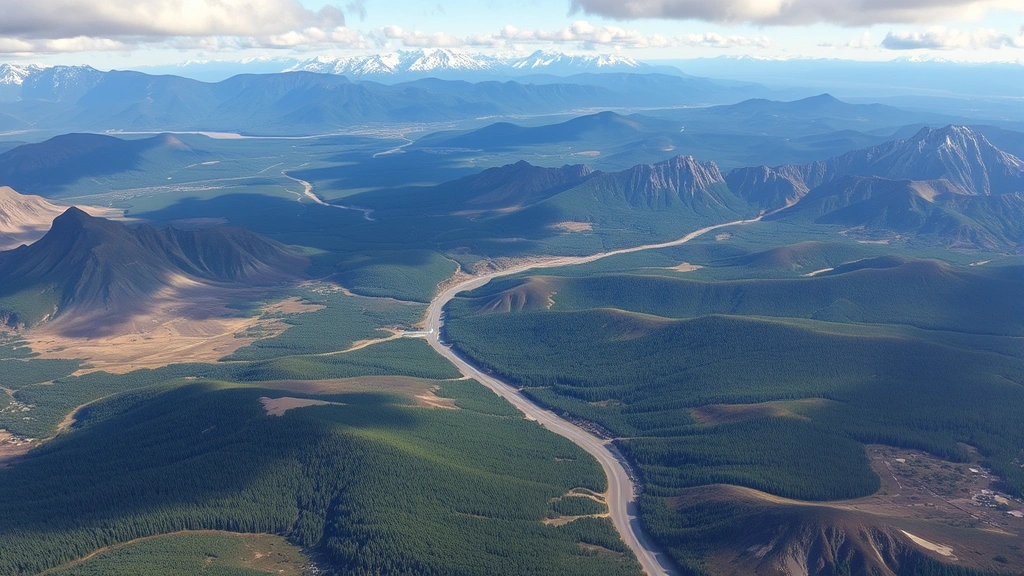
One interesting aspect of AMHTA governance is how it balances its role as a land manager with its mission as a mental health organization. The authority literally oversees millions of acres of Alaskan land. Decisions about timber harvesting, oil and gas leasing, and other resource development directly impact the trust’s revenue. This creates a complex set of considerations where environmental stewardship, economic development, and mental health funding intersect.
The organizational structure also includes regional divisions and partnerships with local health systems. The AMHTA doesn’t directly operate all mental health services across Alaska—instead, it funds and coordinates with various providers. This distributed model makes sense given Alaska’s vast geography and sparse population in many areas. Collaboration with entities like Advanced Mental Health of Washington and other regional providers helps ensure services reach Alaskans regardless of where they live.

Funding Model and Revenue Streams
The financial architecture of the AMHTA is what truly distinguishes it from other state mental health authorities. Rather than depending primarily on legislative appropriations, the AMHTA generates revenue from its substantial land holdings. This includes timber sales, oil and gas leases, and other natural resource development on trust lands.
In practical terms, when a timber company wants to harvest trees on AMHTA land, the authority receives payment. Similarly, energy companies exploring for oil or natural gas on trust property provide revenue. These aren’t trivial sums—in strong economic years, land-based revenues can represent a significant portion of the AMHTA’s budget. This creates a form of financial autonomy that state agencies typically lack.
However, this funding model also introduces volatility. When commodity prices drop or resource extraction slows, AMHTA revenues decline. During economic downturns, the authority might face budget pressures despite having substantial land assets. Conversely, during boom periods, the trust can expand programs and services. This cyclical pattern requires careful financial management and strategic planning.
The AMHTA also receives some funding through state appropriations, federal grants, and fees for services. But the land revenue remains central to its identity and operational capacity. This hybrid funding approach means the authority can’t simply cut services when the state legislature reduces appropriations—it has alternative revenue sources. At the same time, the authority must be responsive to broader state health priorities and public expectations.
Interestingly, the funding model creates interesting policy dynamics. Unlike traditional government agencies that might lobby for increased tax funding, the AMHTA has incentives to maximize land revenues, which can sometimes create tensions with environmental advocates or communities affected by resource extraction. Balancing these competing interests while maintaining focus on mental health services is an ongoing challenge.
Services and Programs
The Alaska Mental Health Trust Authority funds and coordinates a wide range of mental health services across the state. These include inpatient psychiatric facilities, outpatient counseling, crisis intervention services, substance abuse treatment, and supportive housing programs. The AMHTA essentially functions as a major funder and coordinator of Alaska’s behavioral health system, though it doesn’t operate all services directly.
One significant area of AMHTA focus is serving people with serious mental illness and complex needs. This includes individuals with schizophrenia, bipolar disorder, major depression, and other serious conditions. The authority supports both acute care (hospitalization) and longer-term supportive services. Understanding the importance of comprehensive care has led to programs that address housing, employment, and social integration alongside clinical treatment.
The AMHTA also invests in prevention and early intervention. Rather than only treating advanced mental illness, the authority funds programs targeting adolescents and young adults. For context on adolescent mental health needs, examining adolescent inpatient mental health services reveals why early intervention is so critical. The AMHTA’s preventive approach recognizes that catching mental health issues early can prevent more severe outcomes later.
Substance abuse treatment represents another major area of AMHTA funding. Alaska faces significant substance abuse challenges, particularly involving alcohol and opioids. The authority supports residential treatment facilities, outpatient programs, and medication-assisted treatment services. This comprehensive approach to substance use disorders reflects modern understanding that addiction is a treatable medical condition requiring diverse interventions.

The AMHTA also funds peer support programs, where individuals with lived experience of mental illness help others navigate recovery. These programs have grown in recognition and importance, as peer support provides unique value that professional clinicians alone cannot offer. Additionally, the authority supports workforce development, training the next generation of mental health professionals to work in Alaska.
For those interested in mental health careers, exploring advocacy jobs mental health reveals how many professionals enter the field. The AMHTA actively supports this pipeline through funding educational programs and creating employment opportunities in mental health services.
Another important consideration is how the AMHTA coordinates with federal systems. Many Alaskans receive mental health services through federal programs like those provided by the Air Force Mental Health system, particularly in areas with military installations. The AMHTA works to ensure coordination between state and federal mental health services to avoid gaps in care.
Insurance coverage also plays a role in how AMHTA-funded services operate. Organizations like Aetna Mental Health Benefits provide coverage for many Alaskans, and the AMHTA coordinates with insurance companies to ensure adequate reimbursement for mental health services. This coordination helps ensure that publicly funded and privately insured services work together effectively.
Impact on Alaska’s Mental Health System
The existence and structure of the Alaska Mental Health Trust Authority has profoundly shaped how mental health services are delivered and funded throughout the state. Unlike many states where mental health funding is subject to annual legislative battles, Alaska’s trust provides a degree of stability that allows for longer-term planning and program development.
This stability has enabled the AMHTA to invest in innovative programs and research. The authority has funded pilot projects exploring new treatment approaches, supported outcome research to identify what works best, and invested in workforce development. These investments might not occur if mental health funding were purely dependent on annual appropriations and political priorities.
Alaska’s geographic challenges make the AMHTA’s role even more critical. The state’s vast distances, sparse population in many areas, and transportation difficulties create unique mental health service delivery challenges. The AMHTA has invested in telehealth capabilities, mobile crisis teams, and regional service networks to address these geographic barriers. This commitment to reaching underserved populations reflects the authority’s mission.
The AMHTA’s impact extends beyond direct service provision. As a major stakeholder in Alaska’s health system, the authority influences policy discussions, participates in planning efforts, and advocates for mental health priorities at the state level. This leadership role ensures that mental health considerations are integrated into broader health policy discussions.
Research from Harvard Business Review on organizational effectiveness suggests that entities with financial stability and autonomy like the AMHTA can achieve better outcomes than agencies facing constant budget uncertainty. Alaska’s experience appears to validate this principle—the state’s mental health system, while facing challenges like any state, has benefited from the AMHTA’s consistent funding and long-term perspective.
Challenges and Future Directions
Despite its advantages, the Alaska Mental Health Trust Authority faces genuine challenges that will shape its future. One significant issue is the tension between maximizing land revenues and environmental stewardship. As environmental consciousness has grown, the AMHTA faces increasing scrutiny about its resource extraction practices. Balancing the need for revenue with environmental responsibility requires careful decision-making.
Another challenge involves Alaska’s changing demographics and evolving mental health needs. Substance abuse, particularly opioid addiction, has become increasingly prevalent. The AMHTA must continually adapt its service mix to address emerging health challenges. Similarly, the growing recognition of mental health issues in older adults, children, and other populations requires the authority to expand and diversify its programs.
Climate change presents a unique challenge for Alaska and the AMHTA. As environmental conditions shift, land values, resource availability, and the viability of extraction-based revenue models may change. The authority must think strategically about long-term financial sustainability in a changing climate. Some experts suggest that the AMHTA may need to diversify its revenue streams beyond traditional resource extraction.
The AMHTA also faces workforce challenges. Like many states, Alaska struggles to recruit and retain mental health professionals, particularly in rural areas. The authority has invested in training programs and recruitment efforts, but competition from other states and the private sector remains intense. Solving these workforce challenges is essential for expanding service capacity.
Looking forward, the AMHTA appears positioned to continue evolving. There’s increasing discussion about expanding the authority’s focus to include broader behavioral health issues, integrating mental health and primary care more effectively, and addressing social determinants of health. These developments would align the AMHTA with modern understanding of how mental health services should be organized and delivered.
Research from Psychology Today emphasizes the importance of integrated, coordinated mental health systems. The AMHTA’s structure actually positions it well to pursue this integration, as it can coordinate across multiple service providers and funding streams in ways that fragmented systems cannot.
Frequently Asked Questions
What exactly is the Alaska Mental Health Trust Authority?
The AMHTA is a state authority established in 1956 (when Alaska was a territory) to fund and coordinate mental health services. It’s unique because it generates much of its funding from revenues derived from 1 million acres of land holdings, rather than relying solely on legislative appropriations. This land-based revenue model gives the AMHTA unusual financial independence among state mental health agencies.
How does the AMHTA fund its operations?
The AMHTA primarily funds operations through revenues from its land holdings, including timber sales, oil and gas leases, and other natural resource development. It also receives state appropriations, federal grants, and fees for services. This diversified funding approach provides stability but also creates complexity, as land revenue fluctuates with commodity prices and economic conditions.
What services does the AMHTA provide?
The AMHTA doesn’t directly operate all services but rather funds and coordinates a comprehensive system including inpatient psychiatric care, outpatient counseling, crisis intervention, substance abuse treatment, supportive housing, peer support programs, and preventive services. The authority works with various providers throughout Alaska to ensure services reach people across the state.
Who can access AMHTA-funded services?
AMHTA-funded services are available to Alaskans with mental health and substance abuse needs. Eligibility varies by specific program, but the authority’s mission is to serve all Alaskans, with particular emphasis on people with serious mental illness and those who might otherwise lack access to care. Services are available regardless of insurance status or ability to pay.
How does the AMHTA compare to mental health systems in other states?
The AMHTA is distinctive primarily because of its land-based revenue model. Most states fund mental health services through general taxation and legislative appropriations. Alaska’s approach provides greater financial stability but also creates unique challenges related to managing large land holdings and balancing resource extraction with environmental concerns. Other states have occasionally considered similar models but few have implemented them.
What are the main challenges facing the AMHTA?
Key challenges include balancing revenue generation with environmental stewardship, addressing changing mental health needs (particularly substance abuse), recruiting and retaining mental health professionals, adapting to climate change impacts on land values, and ensuring services reach Alaska’s geographically dispersed population. The authority must continually adapt to serve Alaskans effectively while maintaining financial sustainability.
How can I access mental health services in Alaska?
Alaskans can access mental health services through various AMHTA-funded providers throughout the state. Starting points typically include contacting your primary care physician, calling a regional mental health center, or reaching out to crisis services if immediate help is needed. The AMHTA website provides information about available services and how to access them in your area.


