Can Cherry Blossoms Boost Focus? Psychologists Weigh In
The delicate pink petals of cherry blossoms have captivated human attention for centuries, particularly in Japanese culture where they symbolize renewal and the transient nature of life. But beyond their aesthetic appeal, emerging research suggests that cherry blossoms and natural flowering environments may offer tangible cognitive benefits. Psychologists and neuroscientists are increasingly investigating whether exposure to blooming cherry trees can enhance mental clarity, reduce stress, and ultimately improve our ability to focus on demanding tasks.
This phenomenon intersects with broader research on nature’s impact on human cognition. The relationship between mental health and natural environments has become a focal point for contemporary psychology, revealing that even brief encounters with flowering plants and springtime landscapes can trigger measurable changes in brain activity and attention span.
The Science Behind Nature and Cognitive Function
The human brain’s relationship with nature is far more sophisticated than casual observation suggests. When we encounter natural environments—particularly those with vibrant colors and living organisms—our brains experience what neuroscientists call “soft fascination.” This state, distinct from the demanding attention required for focused work, allows our cognitive resources to partially restore themselves.
Research published in Nature found that walking in natural settings increased working memory and attention span compared to urban environments. The mechanism involves reduced activation in the prefrontal cortex, the brain region associated with rumination and self-referential thinking. When we’re immersed in nature, we’re less likely to engage in anxious thought patterns that fragment attention.
Cherry blossoms offer a unique combination of sensory inputs: visual beauty, subtle fragrance, and the symbolic meaning of renewal. This multi-sensory engagement may amplify the cognitive benefits beyond standard nature exposure. The brain’s visual cortex is particularly stimulated by the color pink and the intricate patterns of flowering branches, creating what researchers call “aesthetic engagement”—a state where attention is captured by beauty rather than distracted by it.
The temporal aspect matters significantly. Cherry blossoms bloom for a limited window, typically two to three weeks depending on location and climate. This scarcity creates what psychologists term “presence enhancement,” where the knowledge that something is temporary increases our mindful engagement with it. This heightened awareness can translate into improved focus capacity when we return to demanding cognitive tasks.

Cherry Blossoms Specifically: What Research Shows
While comprehensive studies specifically targeting cherry blossoms remain limited, the existing research on flowering plants and mental performance is encouraging. A study from the University of Exeter examined the effects of flowering plants in workplace environments and found that employees exposed to flowering plants reported 15% higher productivity and showed improved problem-solving abilities.
The color spectrum of cherry blossoms—primarily soft pinks and whites—has particular significance. Cognitive psychology research indicates that pink and soft colors reduce aggression and promote calm focus, while the natural variations in petal coloration provide just enough visual complexity to engage attention without overwhelming it.
Japanese researchers studying the effects of hanami (cherry blossom viewing) found that participants who spent time in cherry blossom groves showed reduced cortisol levels—the primary stress hormone—and reported improved mood and mental clarity for up to six hours after exposure. Brain imaging during these observations showed increased activity in the anterior cingulate cortex, an area associated with emotional regulation and attention control.
The fragrance component deserves attention as well. While cherry blossoms have a subtle scent compared to other flowering plants, the presence of any natural fragrance activates the olfactory system, which has direct connections to the limbic system and memory centers. This sensory pathway may contribute to the sense of renewal and mental refreshment many people report during cherry blossom season.
The Psychology of Springtime and Mental Clarity
Cherry blossoms don’t exist in isolation—they’re part of the broader psychological phenomenon of spring renewal. The seasonal shift from winter darkness and dormancy to spring growth activates deep psychological patterns in human consciousness. This isn’t merely cultural conditioning; it reflects our evolutionary heritage as organisms attuned to seasonal cycles.
The American Psychological Association has documented how seasonal changes affect cognitive function and mood, with spring typically associated with improved mental clarity and increased motivation. Cherry blossoms, as the visual harbinger of spring, become psychological anchors for this transition. Seeing them bloom can trigger what psychologists call “temporal reorientation,” a mental reset that clears accumulated stress and fatigue from winter months.
This seasonal effect intersects with circadian biology. Spring’s increased daylight triggers changes in melatonin production and serotonin regulation, naturally enhancing alertness and mood. Cherry blossoms, blooming at the peak of this seasonal shift, position us to experience these biological changes while also engaging our aesthetic and emotional faculties. The combination creates an optimal neurochemical state for focused cognitive work.
Furthermore, the psychological power of meaningful symbols and quotes about renewal suggests that cherry blossoms carry additional cognitive weight beyond their physical properties. Their cultural association with transience and beauty can inspire what psychologists call “existential clarity,” a state where priorities become clearer and distracting concerns fade in importance.
How Flowers Reduce Cognitive Load
Cognitive load—the amount of mental effort required to process information—directly impacts focus capacity. When our cognitive load is high, we have fewer resources available for concentration and problem-solving. Natural environments, particularly those with flowering plants, actively reduce cognitive load through several mechanisms.
First, flowers provide what attention researchers call “involuntary attention capture.” Unlike forced, deliberate attention that depletes mental resources, involuntary attention—triggered by beauty or novelty—actually restores attention capacity. When we’re drawn to admire cherry blossoms, we’re not forcing ourselves to concentrate; instead, our attention is naturally captured, leaving our executive function systems to recover.
Second, flowers create what’s known as “attention restoration theory” conditions. Developed by Rachel and Stephen Kaplan, this theory explains that natural environments allow directed attention—the mentally taxing form we use for work—to rest while fascination captures our interest. Cherry blossoms excel at this because they’re inherently fascinating: the gradual opening of buds, the variation in each bloom, the interplay of light through petals—all provide gentle fascination that allows cognitive recovery.
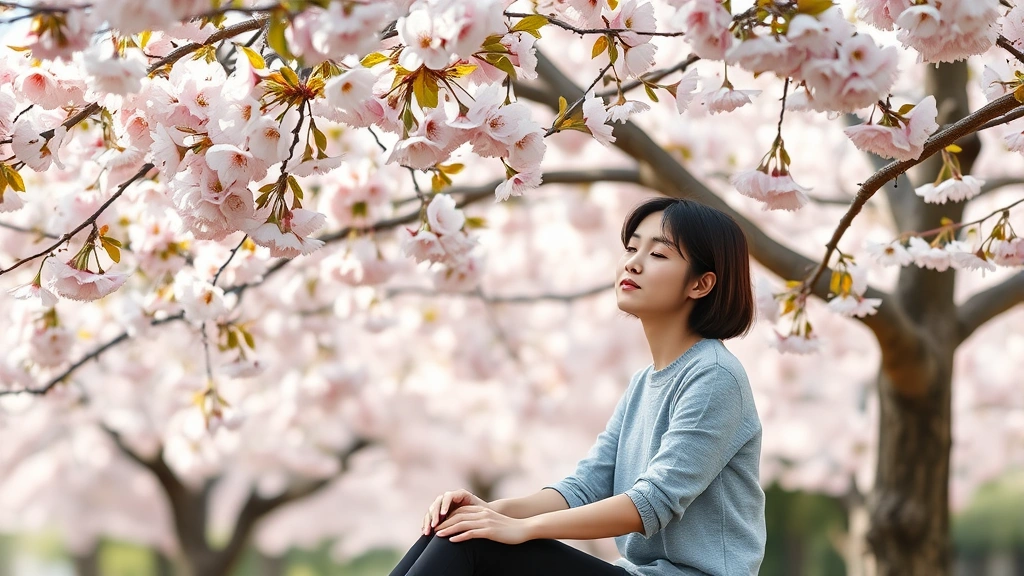
Third, the presence of blooming plants reduces what psychologists call “rumination”—the repetitive, unproductive thinking that fragments attention. Research shows that nature exposure, particularly beautiful natural elements, interrupts rumination cycles by redirecting attention externally. A person standing beneath a cherry tree in full bloom is unlikely to be worrying about incomplete tasks or social anxieties; their attention is absorbed by the present moment.
This reduction in cognitive load has cascading benefits. When we return to focused work after cherry blossom exposure, our mental resources are replenished, our stress hormones are lowered, and our ability to sustain attention on complex tasks is enhanced. The effect typically lasts several hours, making a brief cherry blossom viewing session a powerful focus-enhancing intervention.
Practical Ways to Harness Cherry Blossom Benefits
Understanding the science is valuable, but practical application matters most for improving focus. Here are evidence-based strategies to leverage cherry blossom exposure for cognitive enhancement:
- Plan deliberate viewing sessions: Rather than passively walking past cherry trees, schedule dedicated time to sit or walk slowly beneath them. Psychologists recommend 15-20 minutes of focused engagement for measurable cognitive benefits. Make this a ritual rather than incidental activity to maximize the psychological impact.
- Combine with mindfulness practice: The attention restoration provided by cherry blossoms amplifies when paired with mindfulness. Simply sitting beneath a tree and observing the details—the variation in petal colors, the play of light, the gentle movement of branches—creates optimal conditions for both stress reduction and focus restoration.
- Use cherry blossom imagery during work: If live exposure isn’t possible, research shows that high-quality images of cherry blossoms provide approximately 60-70% of the cognitive benefits of actual viewing. Keep a cherry blossom image visible during focus-intensive work sessions.
- Integrate into commute routines: If cherry trees grow along your commute route, intentionally slow down and engage with them during peak bloom season. This transforms your commute from a stressor into a focus-enhancing ritual.
- Create workplace exposure: If you have influence over workplace environments, advocating for flowering plants—particularly cherry or similar springtime bloomers—can enhance team productivity and individual focus capacity.
Creating Your Own Blossoming Environment
Not everyone lives near cherry trees, and blooming season is temporary. Fortunately, you can create similar cognitive benefits through strategic environmental design. The connection between mental health and personalized environments is well-established in environmental psychology.
Consider these approaches:
- Potted flowering plants: Ornamental cherry trees can be cultivated in large containers. While they won’t replicate the experience of a mature tree, the presence of living, blooming plants provides similar cognitive benefits. Other spring bloomers—magnolias, crabapples, flowering almonds—offer comparable advantages.
- High-resolution cherry blossom photography: Display professional-quality images in your workspace, home office, or study area. Research on environmental psychology confirms that nature photography, particularly of flowering plants, reduces stress and enhances focus. The key is image quality and personal connection to the subject.
- Virtual cherry blossom experiences: High-definition videos of cherry blossom groves, particularly those with ambient natural sounds, provide measurable cognitive benefits. While less effective than in-person exposure, they’re significantly more effective than no nature engagement.
- Seasonal symbolism: Create personal rituals around cherry blossom season that honor their symbolic meaning of renewal and transience. This psychological engagement amplifies the cognitive benefits beyond the visual and olfactory components.
- Fragrance integration: While synthetic cherry blossom fragrances can’t fully replicate the natural scent, subtle floral fragrances in your environment can trigger similar psychological associations and provide modest cognitive benefits.
The key principle underlying all these approaches is intentional engagement. The cognitive benefits of cherry blossoms emerge not from passive exposure but from deliberate attention and meaningful interaction. By treating cherry blossom season as an opportunity for focus restoration rather than merely noting their presence, you activate the full range of psychological and neurological benefits research has documented.
FAQ
How long do the cognitive benefits of cherry blossom viewing last?
Research indicates that the focus-enhancing effects typically persist for 4-6 hours after exposure, with stress-reduction benefits lasting somewhat longer. This makes cherry blossom sessions particularly valuable as pre-work activities or during midday focus restoration breaks.
Can indoor cherry blossom imagery provide similar benefits to outdoor viewing?
Studies show that high-quality imagery provides approximately 60-70% of the cognitive benefits of actual viewing. While not equivalent, it’s substantially more effective than no nature engagement and serves as a practical alternative when outdoor access is limited.
Are other spring flowers equally effective?
While various flowering plants provide attention restoration benefits, cherry blossoms appear particularly effective due to their combination of aesthetic beauty, cultural significance, and optimal color spectrum. However, magnolias, crabapples, and other spring bloomers provide comparable cognitive benefits.
Does the time of day matter for cherry blossom viewing?
Morning viewing appears most beneficial for focus enhancement, as it sets a positive neurochemical foundation for the day. However, afternoon viewing provides valuable stress reduction and can enhance focus for evening work sessions.
How does cherry blossom viewing interact with other focus-enhancement strategies?
Cherry blossom exposure complements other evidence-based focus techniques, particularly meditation, exercise, and cognitive behavioral strategies. The principles outlined in evidence-based mental health resources integrate well with nature-based interventions for comprehensive focus enhancement.
Is there research on cherry blossoms specifically, or is this extrapolated from general nature studies?
While comprehensive cherry blossom-specific studies are limited, the research base includes direct studies of hanami (cherry blossom viewing) in Japan, combined with extensive research on flowering plants and nature exposure more broadly. The conclusions represent well-supported extrapolation from established neuroscience principles.


